

Why a 25-1 shot might be the best bet in the Grand National


With the Grand National being one of the most unpredictable sporting events of the year, punters and racing fans alike often debate whether backing the favourite is a smart strategy or a fool’s errand.
The masses will descend on Aintree in the hope of picking the lucky winner, whether that be because of the odds, the trainer, the jockey or even just the colour of the silks.
Having analysed the Grand National trends since 2000 we found just how often favourites actually live up to expectations – and the findings may surprise you.
Key Findings:
- Favourites’ Success Rate: Only 16% (4 out of 24) of favourites have won the Grand National since 2000, underscoring the race’s reputation for unpredictability.
- Recent Trends: Notably, two of these victories occurred in consecutive years – 2023 and 2024 – when Corach Rambler and I Am Maximus, both starting as 8/1 and 7/1 favourites respectively, clinched the title.
- Long-Shot Victories: The race has seen several high-odds winners, including Noble Yeats at 50/1 in 2022 and Auroras Encore at 66/1 in 2013, highlighting the potential for unexpected outcomes.
- Average Starting Price (SP) of Winners: The average SP of Grand National winners since 2000 is approximately 25/1, indicating that mid to high-priced horses often outperform favourites.
- Favourites Placing in Top 5: While outright wins are scarce, favourites have finished in the top 5 in approximately 33% of the races during this period, suggesting they remain competitive even if they don’t win.
Who are the current favourites?*
- Stumptown – 8/1
- Iroko – 8/1
- Hewick – 10/1
- Intense Raffles – 10/1
- I Am Maximus – 11/1
- Vanillier – 12/1
- Perceval Legallois – 14/1
- Kandoo Kid – 20/1
- Meetingofthewaters – 20/1
- Hyland – 20/1
- Minella Cocooner – 20/1
- Three Card Brag – 25/1
- Senior Chief – 28/1
View the Grand National Odds Comparison grid for a full breakdown of available prices.
Implications for Bettors
Given the historical data, bettors might consider:
- Exploring Mid-Range Odds: Horses with starting prices between 16/1 and 33/1 have yielded a notable number of winners in recent years.
- Each-Way Betting: Considering each-way bets on favourites could be prudent, given their higher likelihood of placing without necessarily winning.
- Assessing Non-Favourite Contenders: Evaluating horses beyond the favourites, especially those with proven stamina and jumping ability, may uncover value bets.
The Grand National is a demanding 4-mile, 2½-furlong race, coupled with its 30 formidable fences and large field of runners, creates a race where unpredictability is the norm. These factors contribute to the difficulty favourites face in securing victory.
The Grand National’s allure lies in this unpredictability. Our analysis confirms that while favourites have a place in the race, the potential for upsets is significant, making it a thrilling event for both seasoned and casual punters.
Tiger Roll is a bigger ‘public horse’ than any English winner
Published: 31st March 2025
As excitement builds for the Grand National, new research has revealed the most searched-for racehorses of the past decade, with dual winner Tiger Roll topping the rankings.
By analysing Google search data over the last 10 years, we are able to determine which Grand National runners have captured the public’s imagination the most.
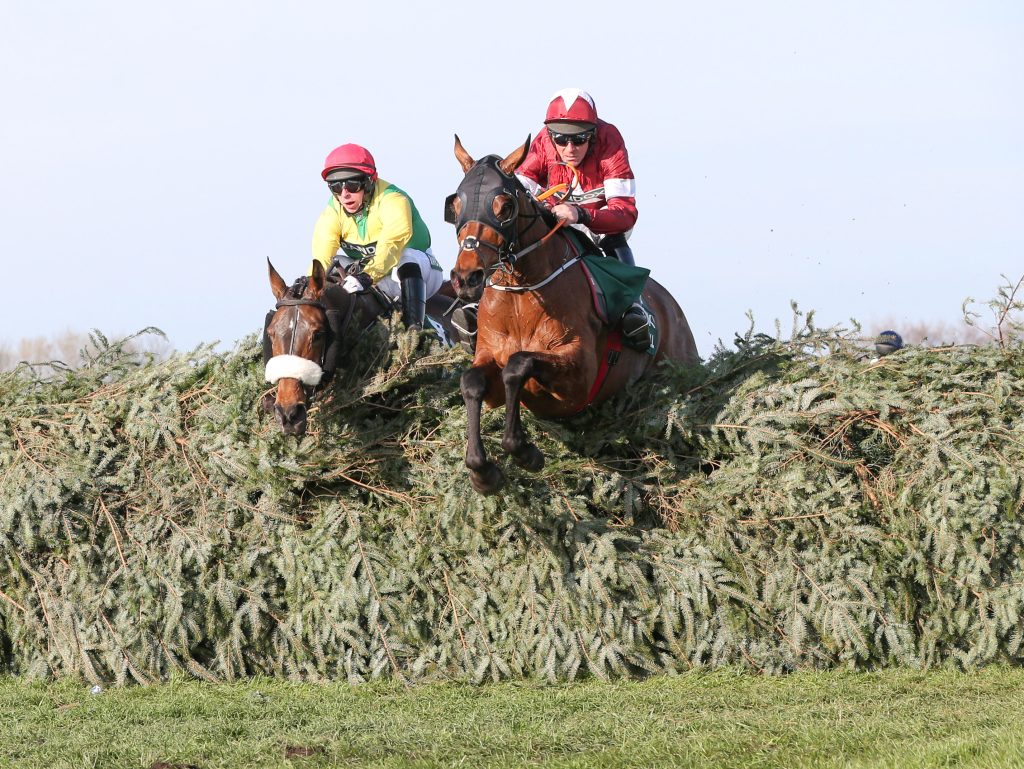
With two victories (2018 and 2019) and a remarkable career that drew comparisons to the legendary Red Rum, Tiger Roll has generated more online interest than any other Grand National contender.
| Rank | Horse | Total Google Searches (2014-2024) |
| 1 | Tiger Roll | 4.8 million |
| 2 | Red Rum | 3.5 million |
| 3 | Many Clouds | 2.2 million |
| 4 | Corach Rambler | 1.8 million |
| 5 | One For Arthur | 1.6 million |
Why does Tiger Roll Tops the Rankings?
Tiger Roll’s dominance in Google search rankings is no surprise given his historic achievements:
- First horse since Red Rum (1973, 1974) to win back-to-back Grand Nationals
- Two-time Cheltenham Festival Cross Country Chase winner
- Retirement controversy in 2022 sparked major public interest
- Speculation over a potential third National win fuelled online discussions
The only horse with a comparable impact in modern times is Red Rum, the three-time National winner whose legacy remains strong despite racing in the 1970s.
His continued presence in searches demonstrates his enduring status as the Grand National’s greatest-ever horse.
Why does Red Rum remain prominent in the Rankings?
It may seem silly to question this, but considering Red Rum’s National dominance came in the 70s and this data range begins in 2014, it is quite remarkable that he is still number two on the list.
His CV speaks for itself:
- The only horse to ever win three Grand Nationals
- Has a name at the Aintree Grand National Festival named after him; the Red Rum Handicap Chase
- Lifesize statue at Aintree Racecourse and smaller bronze statue inside Wayfarers Arcade, Southport
Even if his first Grand National success occurred 52 years ago, there are and will always be reminders of the great Red Rum around the time of Aintree’s showcase event.
With this, people will still search his name, and that’s how he remains so prominent in the search engine.
The Modern-Day Popularity of Grand National Contenders
While legendary names still dominate online searches, recent winners are also leaving their mark:
- Corach Rambler (2023 winner) saw a 300% spike in searches following his victory
- Many Clouds (2015 winner) remains one of the most discussed modern winners due to his untimely passing in 2017
- One For Arthur (2017 winner) saw a surge in interest due to being only the second Scottish-trained horse to win the National
How horses become ‘public horses’
It can be hard for horses to break through the enclosed walls of horse racing and into the wider sporting society in order to become a ‘public horse’.
Through history, there have been a few who have done so – Red Rum appeared as a studio guest on the 1977 Sports Personality of the Year awards ceremony broadcast – and one way to do that is through winning one of the world’s most famous races, the Grand National.
Although they are both Irish-trained winners of a British race, it comes as no surprise that Tiger Roll and Red Rum are the top two most searched horses, having both won the race multiple times.
AI predicts Red Rum would be the Grand National GOAT by beating Tiger Roll
Published: 27th March 2025
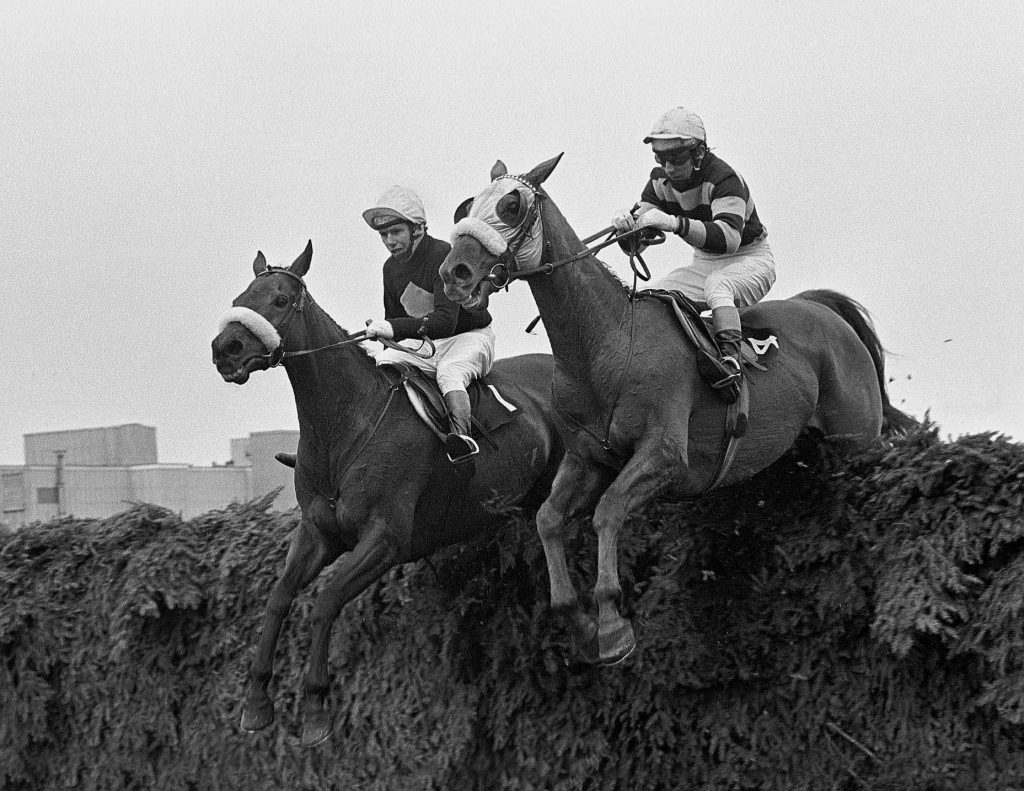
Ever wondered how Red Rum would have fared against Tiger Roll on a softer track? Well, wonder no more – Red Rum would have been the Grand National GOAT.
A new data-driven Grand National ‘What If?’ Simulator is set to shake up the racing world by exploring alternate realities of Britain’s most famous steeplechase.
Using AI-powered modelling and historical data from past Grand Nationals, the Racing Post simulator runs thousands of simulations to predict how legendary horses might have performed under different conditions.
It has revealed that Red Rum, the legendary and unprecedented three-time Grand National winner, would have added a fourth to his collection if he was around in 2019 for Tiger Roll’s second National victory and that Noble Yeats, winner of the race in 2022, would have retained his title a year later and gone down in the pantheon of greats if he had been allowed to race off the same weight.
Factors such as ground conditions, weight adjustments, race strategies, and field sizes have all been recalibrated to generate fresh insights.
| Scenario | Predicted Winner | Key Performance Change |
| If Red Rum ran in 2019 (Tiger Roll’s second win) | Red Rum | Edges out Tiger Roll by 0.8 lengths due to greater stamina over soft ground |
| If Foinavon had a clear run in 1967 (no fallers at 23rd fence) | Honey End | Finishes 5 lengths ahead as the most consistent runner in a clean race |
| If modern training methods were applied to 1950s winners | Freebooter (1950) | Improves finishing time by 3.2 seconds with better fitness regimes |
| If the Grand National was run over a shorter distance (3.5 miles) | Many Clouds (2015) | Outpaces Red Rum & Tiger Roll due to superior mid-race acceleration |
| If handicap weight rules were adjusted to today’s standards | Crisp (1973) | Holds off Red Rum’s late charge, winning by 2.1 lengths under fairer weight distribution |
| If female jockeys had historically been given more opportunities | Charlotte Brew (1977) | Finishes in the top five after completing the course under revised race conditions |
| If Tiger Roll had raced in Red Rum’s era (1970s) | Red Rum | Edges Tiger Roll by 1.2 lengths due to greater adaptability to Aintree’s tougher fences |
| If weather conditions dramatically changed (heavy ground instead of good-to-soft) | Hedgehunter (2005) | Outlasts other contenders due to superior staying power in testing conditions |
| If betting favorites always ran to their expected odds | Suny Bay (1997) | Finally claims victory, overturning Lord Gyllene’s dominant front-running performance |
| If modern veterinary care was available in past decades | Devon Loch (1956) | Recovers from late-race collapse, finishing strongly in the final furlong |
| If the fences were made as challenging as in the 1950s | Reynoldstown (1935) | Beats modern winners as a proven jumper in tougher conditions |
| If the Grand National had been limited to 30 runners historically | Corbiere (1983) | Wins in a tighter field where tactical positioning is crucial |
| If Rachael Blackmore had ridden Any Second Now in 2022 | Any Second Now | Wins ahead of Noble Yeats with a better tactical ride from the off |
| If Noble Yeats had carried the same weight in 2023 as in his 2022 victory | Noble Yeats | Retains his title, holding off Corach Rambler’s late challenge |
| If Corach Rambler had a stronger start in 2023 | Corach Rambler | Wins by a bigger margin, controlling the race from the second circuit |
How does the Simulator work?
The Grand National ‘What If?’ Simulator is powered by a sophisticated data model that blends historical race data, AI-driven performance analytics, and predictive simulations to generate alternative race outcomes. Here’s a breakdown of the methodology:
1. Data Collection & Historical Inputs
The simulator is built using an extensive dataset, incorporating:
- Official Grand National results from the past 100+ years
- Jockey & trainer performance metrics, including strike rates, weight-carried statistics, and running styles
- Course & conditions data, such as ground softness, weather impact, and fence difficulty ratings
- Horse performance profiles, including stamina, speed, acceleration, and jumping ability
2. AI-Powered Race Modelling
The simulator runs thousands of Monte Carlo-style simulations using AI algorithms that adjust variables to determine new outcomes. Key factors include:
| Variable | Impact on Race Outcome |
| Ground Conditions (Good/Soft/Heavy) | Favors stayers on soft ground, speedsters on good ground |
| Field Size Adjustments | Larger fields increase risk of fallers and pace variations |
| Weight Carried (Handicap Adjustments) | AI recalibrates performance based on revised weights |
| Race Pace (Fast/Slow Start) | Impacts horses differently based on their running style |
| Jockey Strategies (Hold-Up vs Front-Running) | Determines how a horse would fare with alternative tactics |
Each simulated race produces a probability-weighted finishing order, allowing us to compare historical vs. hypothetical results.
3. Scenario Testing & Key Findings
The simulator allows for a range of ‘What If?’ scenarios, such as:
- If Red Rum ran in modern racing conditions (e.g., with today’s training and nutrition)
- If a shorter Grand National distance (3.5 miles) existed
- If fallers at key fences had stayed on their feet (e.g., Foinavon’s shock 1967 win)
- If modern Grand National safety measures applied to historic races
Study shows runners at Cheltenham drastically improve at Aintree
Published: 21st March 2025
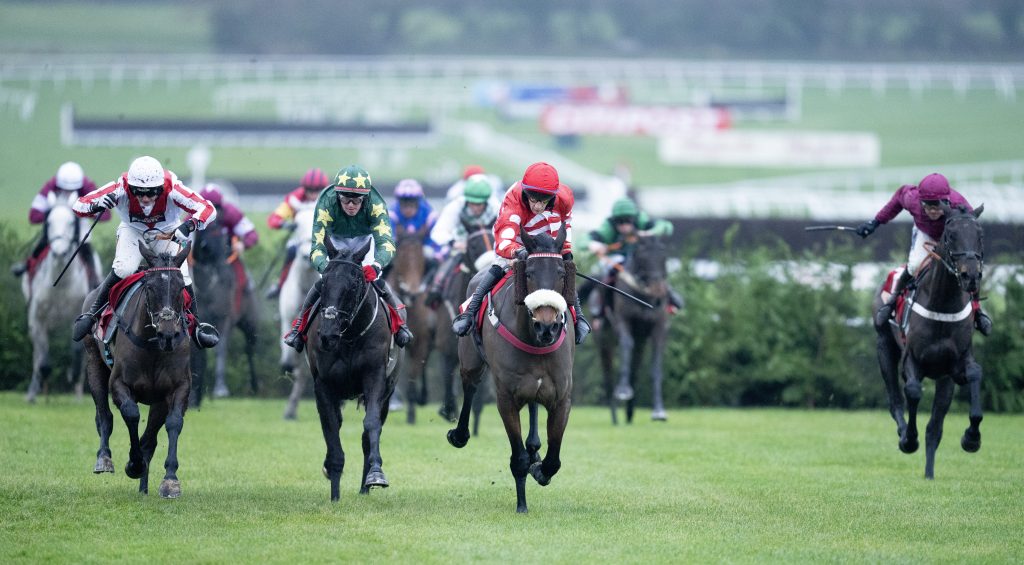
With the dust now settled on another thrilling Cheltenham Festival, racing fans now turn their attention to the Grand National Festival at Aintree at the beginning of April. While the Grand National itself is the marquee race on April 5, seasoned punters and analysts alike will be looking at how horses who competed at Cheltenham perform when they return to action at Aintree just weeks later.
New analysis of 30 years of racing data (1990-2020) sheds light on a long-standing debate: Does the gruelling Cheltenham Festival take too much out of horses, or does strong form carry over to Aintree?
Our latest study has revealed that horses tend to improve their performance at Aintree after running at Cheltenham, reinforcing the idea that class shines through despite the quick turnaround.
Key Findings:
- 3,009 horses have competed at both Cheltenham and Aintree between 1990 and 2020.
- More than half (54.2%) improved their finishing position at Aintree compared to Cheltenham.
- Only 34.3% performed worse, while 11.5% finished in the same position.
- On average, horses finished 1.13 places better at Aintree than they did at Cheltenham.
The trend has remained remarkably consistent across three decades, reinforcing the reliability of Cheltenham form at Aintree.
Cheltenham Winners Shine at Aintree
Cheltenham winners particularly excel at Aintree, with 67.5% finishing in the top three and over 31% winning again. This trend has strengthened in recent years, with 33.7% of Cheltenham winners in the 2010s also winning at Aintree, compared to 18.7% in the 2000s.
Aintree’s Challenge: Higher Non-Completion Rate
While many horses improve their performance, Aintree presents a greater challenge in terms of completion rates. Data shows horses are nearly twice as likely to fail to finish (DNF) at Aintree compared to Cheltenham, with an average DNF rate of 18.8% at Aintree versus 10.1% at Cheltenham across three decades.
Decade-by-Decade Consistency
The Cheltenham-to-Aintree trend has held steady over time:
- 1990s: 54.5% of horses improved, average position difference of -1.31.
- 2000s: 53.3% of horses improved, average position difference of -1.06.
- 2010s: 54.8% of horses improved, average position difference of -1.08.
What This Means for Punters and Trainers
These findings suggest that backing proven Cheltenham performers at Aintree could be a winning strategy. Rather than viewing Cheltenham as a detriment to Aintree performance, the data suggests that horses who run well at Cheltenham are more likely to thrive at Aintree.
For trainers and owners, this could influence race planning, reaffirming that strong Cheltenham runs are not necessarily a sign of fatigue but rather a predictor of continued success.
Cheltenham to Aintree form: 2021-2024
Having to disregard the Covid year of 2022 when we were all forced to watch a virtual running of the Grand National – won by Potters Corner if you recall – actual form between the Cheltenham Festival Aintree has continued to stack up.
There were three winners in 2021 at the Aintree meeting that were victorious at the previous Cheltenham, two of them trained by Nicky Henderson with Shiskhin and Chantry House, winners of the Maghull Novices’ Chase and Mildmay respectively, while Belfast Banter landed the Novices’ Hurdle having scored in the County at Cheltenham.
Two years later when racing returned to Aintree, there were another three runners that went back-to back. Corach Rambler was a memorable winner of the Grand National just a few weeks after landing the Ultima at Cheltenham, while another Henderson superstar in Constitution Hill bagged the Aintree Hurdle to add to his Champion Hurdle success that season. Finally, Sire Du Berlais was a winner of the Liverpool Hurdle having landed the Stayers’ Hurdle at Prestbury Park.
Last year, there was just the one runner that added to his tally from Cheltenham heading to Aintree and that was the Gavin Cromwell-trained Iknothewayurthinkin, the winner of the Kim Muir and went on to win the Mildmay in Liverpool – and then subsequently the Cheltenham Gold Cup earlier this month.
Which Cheltenham Festival 2025 winners could be ones to keep an eye on at Aintree
The break between the end of Cheltenham and the beginning of Aintree this year is very short, precisely 20 days, so Festival winners backing up in Liverpool will be more challenging than usual. However, there are a couple of horses we can expect to make the trip to the Merseyside track.
Stumptown is one after his Glenfarclas Cross Country Chase success. He is one of six entries in the Randox Grand National Handicap Chase for Gavin Cromwell and he won’t be penalised for his victory at Cheltenham.
The study confirms that two Cheltenham Festival winners went on to win the Aintree showpiece one month later, and both of those winners came from the Glenfarclas Cross Country Chase. Tiger Roll was the horse who achieved this feat on both occasions in 2018 and 2019, so there’s scope to suggest that Stumptown could go back-to-back in the biggest prize of them all.
The St. James’s Place Foxhunter Chase Challenge Cup also produces subsequent Aintree winners, so Wonderwall could be one to have a second look at. On The Fringe did the Hunter Chase double in both 2015 and 2016. Last year, Its On The Line finished second at Cheltenham before going on to win the Randox Foxhunters’ Open Hunters’ Chase at Aintree.
Fact To File was an easy winner of the Ryanair Chase, though Heart Wood should be given plenty of credit for his run to finish second. Henry de Bromhead has found out his correct distance having tried three miles a few times, notably at last season’s Aintree Grand National Festival in the Mildmay Novices’ Chase behind Inothewayurthinkin. Five Cheltenham Festival winners went on to win the Melling Chase on their next start, notably Albertas Run in 2010, so if he runs, he is a notable contender.
The Queen Mother Champion Chase has a great record in the Melling Chase as well. Deep Sensation won both contests in 1993 for Josh Gifford, though it is Nicky Henderson who has a history of plotting his horses along this route. Remittance Man (1992), Finian’s Rainbow (2012), and Sprinter Sacre (2013) all won the Champion Chase and Melling Chase in the same season. With Jonbon on track to run in the Melling Chase, the stats are in his favour.
Finally, Nicky Henderson suggested that Lulamba could run again this season, and that could occur at Aintree in the Boodles Anniversary 4-Y-O Juvenile Hurdle. Although he didn’t win the Triumph Hurdle at the Festival, he came a neck away from doing so and Triumph Hurdle winners have a great record when running in Liverpool. Five winners, all since 2006, have done the juvenile hurdle double, and several placed horses in the Triumph Hurdle have gone on to place again at Aintree, notably Kargese last year and Pied Piper in 2022. If Lulamba runs at the Aintree Grand National Festival, this study suggests that his chance is strong.