


Racing clubs still raging against the dying of the light as they continue to provide the sport's PR
The Front Runner, Chris Cook's popular daily email, was named the specialist/regional newsletter of the year at the Press Gazette's Future of Media Awards in 2024. Written principally by our award-winning senior reporter since its launch in 2021, it has become a beloved part of our Racing Post+ package.
Here you can read a free sample of the award-winning newsletter, focusing on the form of this year's Derby, which is normally available exclusively for Racing Post+ subscribers.
Subscribers can get more great insight, tips and racing chat from The Front Runner every Monday to Friday. Those who aren't yet signed up for The Front Runner should click here to sign up and start receiving emails immediately!
Not a Racing Post+ subscriber? Click here to join today and also receive our Ultimate Daily emails plus our full range of fantastic website and newspaper content.
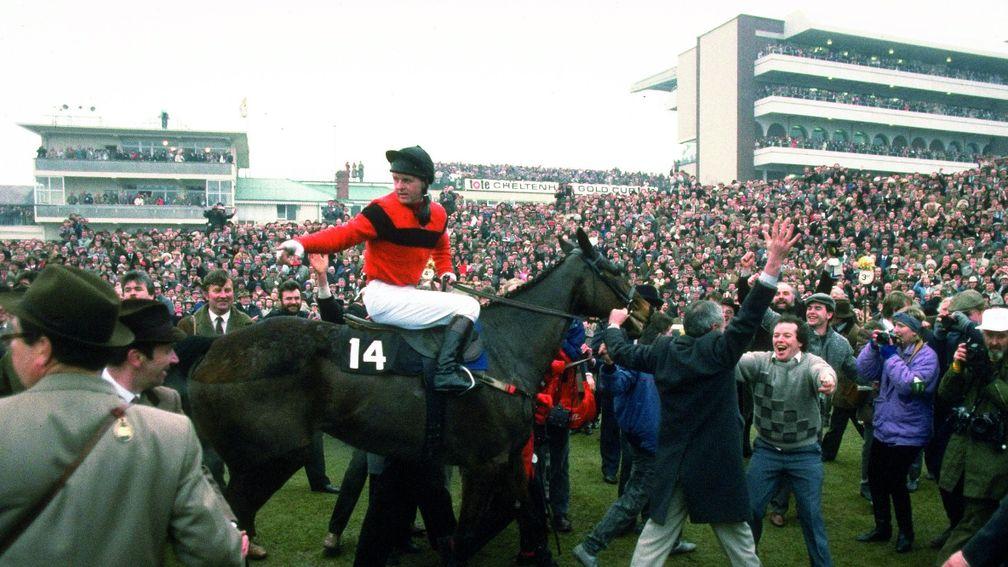
The successful side of racing clubs was on show last Thursday night when a lively crowd, about a third of the membership of the Cheltenham & Three Counties Race Club, turned out to remember the late Alastair Down and to listen to some great old war stories from Jonjo O'Neill. It was fun to be among fellow enthusiasts and looking forward to the jumps season.
Racing clubs still exist, although the times have moved against them in various ways. There are others in London, West Berkshire and Wales.
The North & Midlands Racing Club covers a very large area, a sad hint at the fact it has inherited members from other clubs which are no longer with us. It began in 1980 as purely the North-West Racing Club but has since absorbed clubs based in the Midlands and Yorkshire.
Chairing our meeting in Cheltenham last week was Chris Pitt, renowned racing historian and author of A Long Time Gone, about Britain's forgotten old racecourses. He was also for many years the driving force behind the Midlands Racing Club, which absorbed the East Midlands club before itself folding up in 2016.
"It got to the stage where we weren't getting new members and the ones that we'd got weren't turning up," Pitt recalls. Racing clubs struggle against competing attractions that did not exist in their heyday. "When we started in 1985, there was no football on TV every night, there was no Sunday racing, so you could do stable visits then.
"Latterly, we were getting guests who'd drive 120 miles and we couldn't get members to travel across Birmingham."
Preview nights for the Cheltenham Festival and the Grand National were still reliably rammed. But do two spring successes justify keeping a racing club going the rest of the year? He and his allies decided not.
But it had been great fun while it lasted. Pitt was especially proud of his Grand National panels, when he would locate and bring along jockeys who'd played notable roles in Aintree history. He reckons a total of 28 National-winning jockeys addressed the Midlands club at one time or another, including Bruce Hobbs and Dick Saunders, the youngest and oldest winning jockeys in the race's history, who appeared on the same panel one year.
He created a Foinavon-themed night, featuring John Buckingham, Stan Hayhurst, Johnny Leech and a couple of other riders who had been unhorsed during the famous melee at the 23rd fence in 1967. At other times, guests included Sir Peter O'Sullevan, Frankie Dettori and Julian Wilson.
This was in the heady days of the 80s and early 90s when racing clubs were going strong. Pitt recalls 11 substantial ones, including in Scotland ("They produced a lovely magazine") and the south-west. The Sporting Life Weekender newspaper carried a column devoted to racing clubs. "For a short time, we had an umbrella organisation, the Federation of British Racing Clubs."
Those halcyon days behind us, clubs now rely on the energy and enthusiasm of committee members to keep the wheels turning. Kate Austin, secretary of the London Racing Club, does a lot of the organising, helped by the Front Runner's colleague Lee Mottershead, who is president.
"We can't rely on just having in-town previews," Austin says. "It's too expensive." Well, it would be, in High Street Kensington, which has generally been agreed on as the best central point for London meetings.
Rather than increase subscription prices at a time when most of us are focused on the bottom line, the London club seeks other ways to turn a coin. The Cheltenham preview night is usually a success on that front.
"We do yard visits, especially in summer. We do discounted racecourse visits and we've built up really good relationships with Ascot, Epsom and Kempton."
Austin reports that the club proved its worth during a recent visit to Dylan Cunha's yard, when four members, who had all left behind previous ownership ventures, signed up for shares in syndicate horses at the stable.
Gerald Kay, previously a member of the London club, eventually gravitated to Cheltenham, where he has become vice-chair of the club that ran Thursday's meeting. It continues to attract audiences that make it sustainable but Kay feels its membership could be bigger, considering the huge crowds attracted to the local racecourse each autumn and spring.
"We're not going to get people in their 20s but it would be good if we got some people in their 30s and 40s," he says. "That's what we're trying to do and it's very difficult."
As with London, stable visits and racecourse visits have proved beneficial. Worcester and Cheltenham give help here and there.
So they should, of course, since these clubs generally involve people doing a lot of unpaid PR work on the sport's behalf. A case could be made for the provision of central funding, if money weren't already too tight to mention.
Racing likes to rely on the market providing necessary services and several trainers now run their own racing clubs, with interests in one or two horses in the yard. Coral run a racing club. Cheltenham runs a racing club, also with an ownership interest.
It begins to seem a crowded market. Arguably, it's surprising that any of the old clubs survive, bearing in mind that the internet now allows enthusiasts to gather without having to leave their own homes.
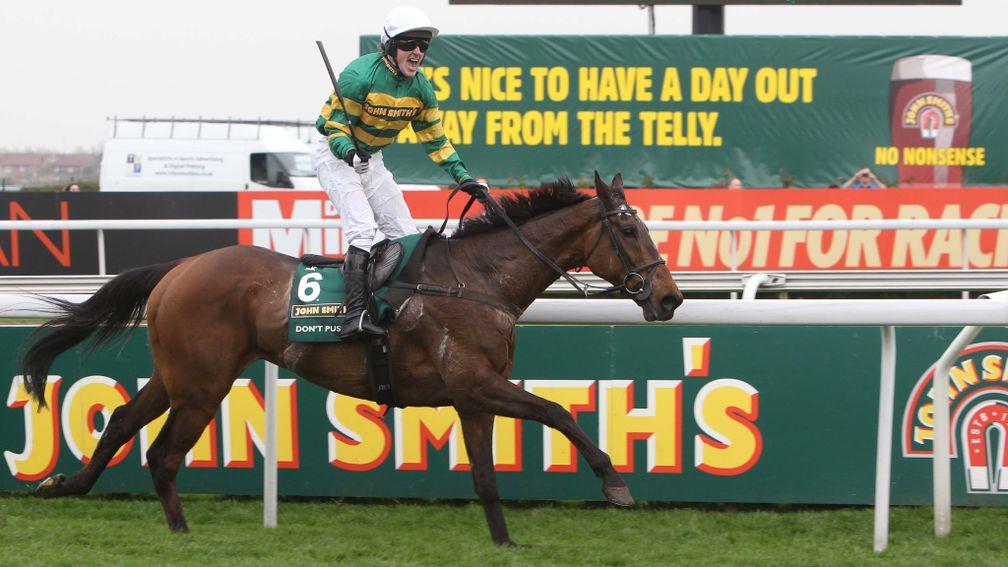
But Jonjo rewarded those who turned up last week, telling stories about Dawn Run and Don't Push It that I've never seen in print. The old ways can still be the best.
Read these next:
Through the Lens: last week’s standout racing moments in pictures

The Front Runner is our unmissable email newsletter available exclusively to Racing Post+ subscribers. Chris Cook provides his take on the day's biggest stories and tips for the upcoming racing every morning from Monday to Friday. Not a Racing Post+ subscriber? Join today and also receive our Ultimate Daily emails plus our full range of fantastic website and newspaper content.
Published on inThe Front Runner
Last updated
 Copy
Copy- How the mighty have fallen - has any champion lost their love for jumping quite like Constitution Hill?
- There has been a loss of colour in the Coral Gold Cup - but it is no surprise that grizzled veterans head elsewhere
- It'll be great to see Constitution Hill back - but it's time to be realistic about his chances of returning to the top
- Here comes the sun - and there go the hurdles: Cheltenham’s Sunday highlight could face another bright dilemma
- The importance of being eager: why it could pay to follow front-runners in Saturday's Paddy Power Gold Cup at Cheltenham
- How the mighty have fallen - has any champion lost their love for jumping quite like Constitution Hill?
- There has been a loss of colour in the Coral Gold Cup - but it is no surprise that grizzled veterans head elsewhere
- It'll be great to see Constitution Hill back - but it's time to be realistic about his chances of returning to the top
- Here comes the sun - and there go the hurdles: Cheltenham’s Sunday highlight could face another bright dilemma
- The importance of being eager: why it could pay to follow front-runners in Saturday's Paddy Power Gold Cup at Cheltenham