


How British racing is leaving no stone unturned in ensuring the welfare of the horses at Aintree
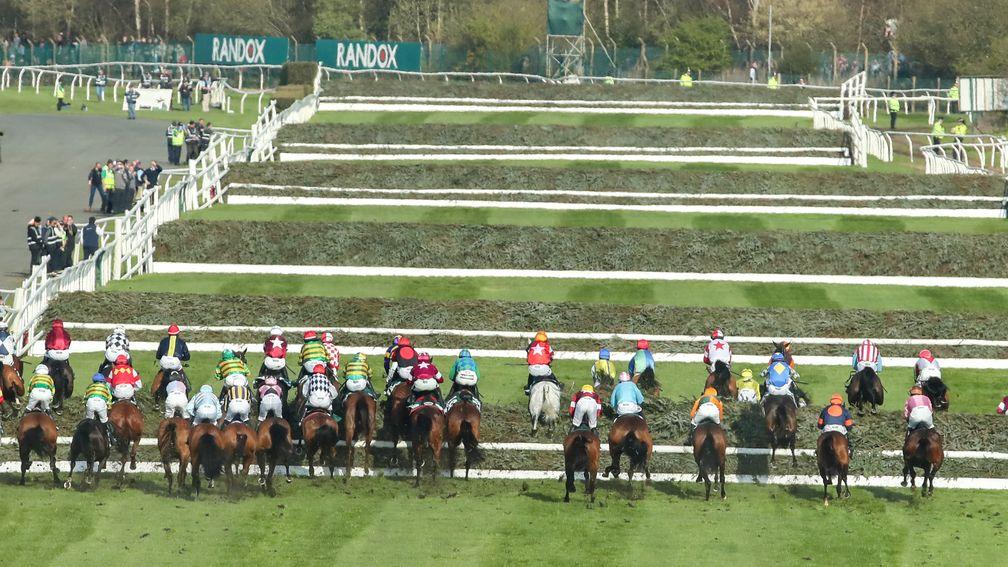
It’s great to see the way racing is embracing the latest technology to help further improve horse welfare – and a key development will be used at Aintree this week.
As a racecourse veterinary officer and the BHA’s head of equine regulation, safety and welfare, I have experienced first-hand how state-of-the-art innovation is helping us reduce risk in horseracing.
The rise of AI has opened up a new avenue for us to explore. We’ve recently been trialling a ground-breaking equine gait analysis software called Sleip. The software, which was developed in Sweden, is currently being tested and, if adopted, will add an additional layer of scrutiny to the pre-race trot-ups commonplace within our race-day checks.
Traditionally, lameness – or gait asymmetry – has been assessed by eye. But lameness can change, sometimes by the stride and certainly over time, and it can be difficult to fully characterise these differences using the traditional assessment process.
Sleip has the potential to allow us to keep a digital record and objective assessment of the horse’s movement which complements the vet’s opinion. The app records high-quality videos and provides us with a slow-motion view of the horse’s gait. Crucially, it also allows vets, trainers and their teams to compare a horse’s movements over time, and from race to race – monitoring any changes that might have occurred.
We will be filming every horse running at Aintree during pre-race examinations as part of the trial and when it concludes in June, we will have used the app at more than 100 race meetings across Britain. We are very grateful to the Racing Foundation for helping to fund this trial.
Sleip is not currently used in any regulatory capacity or decision-making and if it gets to that stage there will be a full consultation, but the trial has been very well received and I am delighted trainers have been so helpful and welcoming. Collaboration is vital to these types of initiatives and trainers understand we all have a collective responsibility to improve the safety and welfare of our racehorses.
There are numerous other approaches we are taking to further improve our efforts. One is the Racing Risk Models project, developed in collaboration between the Horse Welfare Board (HWB) and Royal Veterinary College (RVC). These are complicated mathematical models that allow us to understand where the areas of greatest risk occur. Inputting new information into these, such as objective insight we might get from Sleip, will help direct efforts towards practical interventions.
All of the BHA vets have for a couple of years been using digital stethoscopes, which provide information on the rate and rhythm of a horse’s heart that can then be shared with experts in real time for their advice. This allows us to make better decisions for the horse, either through preventing it from racing that day or by being able to categorise the anomaly as within normal expectations.
There is also a wealth of research going on around the world that may be useful. I am very interested in the use of wearable devices that record a horse’s heart rate and rhythm, stride length, speed and ECGs during exercise, which could help us gain great insight into exercise-associated sudden death in racehorses. It is also thought a horse carrying an undetected injury that could lead to a fracture will show a change in their stride pattern beforehand. It will be very interesting to see what comes out of the research.
We are also working on a project with Professor Roger Smith, supported by the Horse Welfare Board, to better understand the effect of tendon boots on the temperature of a horse’s legs and their ability to prevent strike injuries.
Everything we do as vets in racing, alongside the Horse Welfare Board and colleagues across the industry, is about reaching the best possible welfare standards while still retaining the essence and magic of the sport. Technology and innovation will only help us succeed in this mission, to make racing the safest and strongest it can be for future generations to enjoy.
Sally Taylor is the BHA’s head of equine regulation, safety and welfare
Racing Post+ subscribers can read more Another View columns here:
Merit over mediocrity: fierce debate over prize-money highlights a ludicrous disparity
Sorry, James, but there's no way the start cost East India Dock the Triumph Hurdle

The Front Runner is our unmissable email newsletter available exclusively to Racing Post+ subscribers. Chris Cook provides his take on the day's biggest stories and tips for the upcoming racing every morning from Monday to Friday. Not a Racing Post+ subscriber? Join today
Published on inAnother View
Last updated
 Copy
Copy- Seizing his moment: how Darragh O'Keeffe stepped out of Rachael Blackmore's shadow to become the standout rider of the season
- When Halloween once ruled Boxing Day - and how racing has missed a trick by not pushing out the boat for young fans
- Trust me, the Breeders' Cup is brutal but brilliant - all you need is a half-baked system and a whole lot of luck
- Why no Frankel Stakes? Surely it's time to honour the unbeaten champion racehorse
- Oisin Murphy may be out on his own but Cieren Fallon is riding high and two old allies could see him finish season with a flourish
- Seizing his moment: how Darragh O'Keeffe stepped out of Rachael Blackmore's shadow to become the standout rider of the season
- When Halloween once ruled Boxing Day - and how racing has missed a trick by not pushing out the boat for young fans
- Trust me, the Breeders' Cup is brutal but brilliant - all you need is a half-baked system and a whole lot of luck
- Why no Frankel Stakes? Surely it's time to honour the unbeaten champion racehorse
- Oisin Murphy may be out on his own but Cieren Fallon is riding high and two old allies could see him finish season with a flourish