


- More

'Why are you risking all of this?' - racing's enormous economic and social contribution to the UK
Peter Scargill explores racing's importance to life in Britain


There are some big numbers at the forefront of Harry Fry’s mind right now.
“BHA research has shown the south-west is going to take the biggest hit from this: 500 job losses in the first 12 months and an economic hit of £60 million in the first five years,” the trainer says. “Being based here, the fact that research is showing this will be the biggest area of impact is really worrying.”
The potential consequences of Treasury proposals to raise online betting duties will be felt beyond the south-west of England, and right across Britain.
With 85,000 people directly and indirectly employed in racing – and only football drawing in more spectators a year – the economic and cultural landscape of Britain, particularly in its more rural areas, could drastically change after this year’s Autumn Budget.
Fry’s base in Dorset, surrounded by fields, woodland and farmsteads, is more than a three-hour drive to Westminster, where on Wednesday the ramifications of tax increases will be spelled out to policymakers as part of the ‘Axe the Racing Tax’ event marked by the cancellation of British racing for the day.
Agriculture and horses are the mainstays of employment in Fry’s part of Britain, and a gateway into employment for many of the area’s younger people.
“We’re not a million miles from Yeovil and Dorchester, but outside of those towns it’s pretty much agricultural or equine employment in one form or another,” says Fry, who employs between 12 and 16 staff depending on the time of year.
“We're only a small business but a key one in the local area in terms of how we interact with it. The demographic of the people we employ is younger, it is often their first job out of school.”
Those employed by Fry are either from the local area, have accommodation rented for them by the trainer, or live in on-site mobile homes. These people spend their money on local services, such as the village shop a mile down the road, or in the pub when socialising – or celebrating a winner for the yard.
The yard itself, Fry points out, is the consequence of the diversification of a small farm, constructed using local planners, architects and builders, and the land is managed in a way to promote environmentally-friendly practices. And there is more.

“We outsource our financial management to a local company, which employs accountants,” Fry says. “We have an owners’ day on Sunday when we’ll have people coming down to stay in local hotels, B&Bs and pubs. People are coming into the area to go to local restaurants, it’s a knock-on effect all the way along by us being in this area.”
Fry’s business is part of British racing’s annual £4 billion contribution to the United Kingdom’s economy, with £300m paid in taxation by the sport.
Independent modelling by the BHA has forecast that British racing’s income will drop by £66m annually if the duty paid by bookmakers on online sports betting, such as racing, is brought into line with the higher rate paid on casino-style games. Over five years, the sport is forecast to lose £330m in income, with 2,752 jobs going in the first year alone.
Some of those jobs under threat from the Treasury proposals are in Scotland, where voting will take place in the spring of next year to elect new MSPs to the Scottish parliament.
Racing in Scotland generates £300m a year for the nation’s economy and pays £50m in tax. It supports 3,400 jobs and 300,000 spectators a year attend its 100 racedays, according to Scottish Racing, an organisation representing the interests of the sport. Of those spectators, 89 per cent are from middle and lower socio-economic groups.
Benchmarking undertaken by Scottish Racing shows the sport contributes more than three times as much to the economy as the computer games industry, led by Rockstar Games, creator of the renowned Grand Theft Auto franchise, and employs only a quarter fewer people than the fishing industry in Scotland.
Delly Innes, chief executive of Scottish Racing, says: “If you were to start all over again you’d put the racecourses exactly where they are now. Combined, they contribute £24.6m to their local economies, so it’s safe to say horseracing and the horseracing industry is massively important to the local economies, particularly in rural areas in Scotland, and there are [some] very rural areas in this country.
“The Borders is where the majority of trainers are, and that’s already a very rural area that relies on the Scottish and British racing industries, which are under threat due to this proposal.
“I have to say, the politicians here are very aware of this and we’ve had a huge amount of support from a number of MPs and MSPs because they recognise how important it is, not only economically, but culturally and socially.
“You’ll remember that during Covid, racing was given £2m by the Scottish government, without which we wouldn’t have five racecourses. Now we’re facing another potential hit from the UK government, which leaves a nasty taste in the mouth.”

Innes says the forthcoming elections in Scotland have helped sharpen the minds of politicians to the unintended consequences of tax harmonisation, and on jobs in particular.
“The cross-party group on Scottish racing and bloodstock, which Scottish Racing established in 2016, has written to the Treasury saying the most realistic worst-case scenario that will be caused by this harmonisation is racecourse closure,” Innes says. “And not just closures, but it will impact the 28 yards and 300 racing staff at them, and this is all ahead of an election in Scotland in May next year.
“They’ve made it clear that the concerns aren’t just theirs but are shared by thousands of voters in Scotland, and the unintended consequences for Scotland, and racing in general, could be sweeping and drastic.”
The potential for an economic and cultural hammer blow to British racing comes at a point when the sport is seeking to expand its influence and engagement, and after months of positive attendance figures reflecting the continued appetite for racing.
A summary released last week of the cross-industry Project Beacon initiative estimated that a further 7.1 million people could be persuaded to engage to a greater extent with racing, offering up viable growth opportunities for the sport.
A study by West Suffolk council in 2022 showed visitors to Newmarket already contributed £15.2m to the economy and directly contributed to 197 jobs. That was from a total economic input of £256.2m that racing made to the area, with 3,285 people employed as a result.
The importance of the sport was also highlighted in North Norfolk District Council’s Economic Strategy and Action Plan for 2023-27, in which Fakenham racecourse was recognised as one of the area’s key visitor attractions.
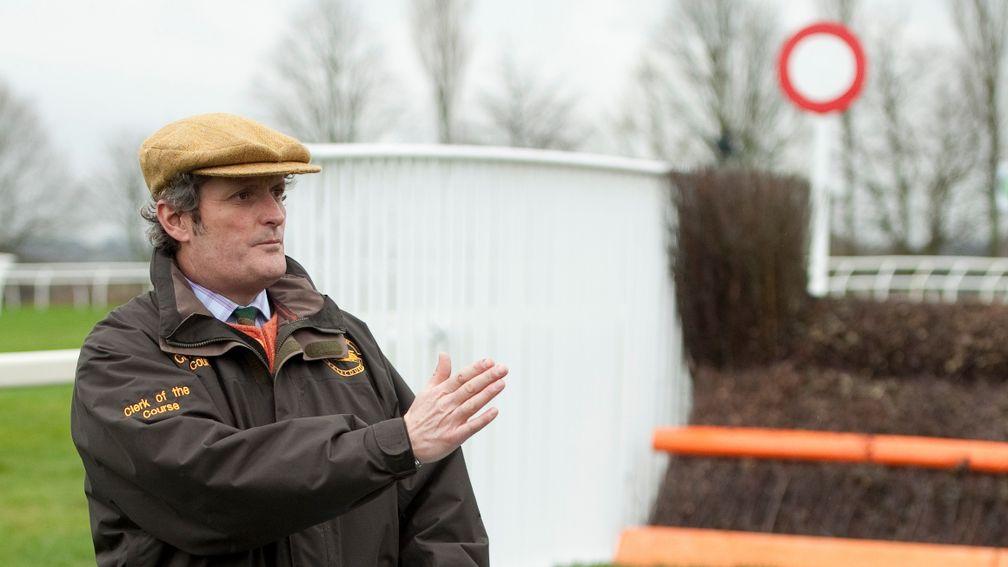
David Hunter, Fakenham’s chief executive and a town councillor, sums it up neatly.
“In my experience and view, anything that’s good for Fakenham racecourse is good for the town and the surrounding location,” he says. “It really does play a central role in the local economy.”
Alongside the racecourse, which hosts 11 fixtures a year, Fakenham has a caravan and camping site, providing a launchpad to the North Norfolk coast, is seeking planning permission for a secure dog-walking field and is the base for several local sports clubs.
Catering on racedays is provided by a pub seven miles from the track, owners receive locally-sourced produce alongside prizes for winning and being placed, and race sponsors are primarily drawn from the people and businesses in the area.
At the start of the month, Fakenham welcomed 170 local businesses to the track to offer greater insight into what it has to offer, as well as to provide an opportunity for networking and socialising.
“We had an accountant who liked to come racing here and he used to tell his secretary that, if anyone called, to say he was ‘on a course’, which he technically was,” Hunter says. “He liked to come here for the racing, but it also gave him an opportunity to meet people and do business in a place other than the office.
“Of course, that is not why everyone is coming to Fakenham, but people meeting and engaging socially and differently is part of what we provide to local people and the local economy.”
Attendances in the first half of 2025 were up 29 per cent at Fakenham, according to Hunter, with ladies’ day in June helping to contribute to “buzzing bars and restaurants” in the town and at the track.
Fakenham receives payments from Racecourse Media Group (RMG), which represents the commercial rights of its racecourse partners, and these, potentially, will drop because of reduced income from bookmakers as a consequence of tax harmonisation.
“The simple fact is that media rights are by a country mile our biggest income stream,” Hunter says. “Equally, prize-money is by a country mile our biggest outgoing.
“We would want to keep investing in prize-money for trainers, owners and jockeys, but that will be difficult if there is less money coming in from media rights. It’s a serious worry for us.”
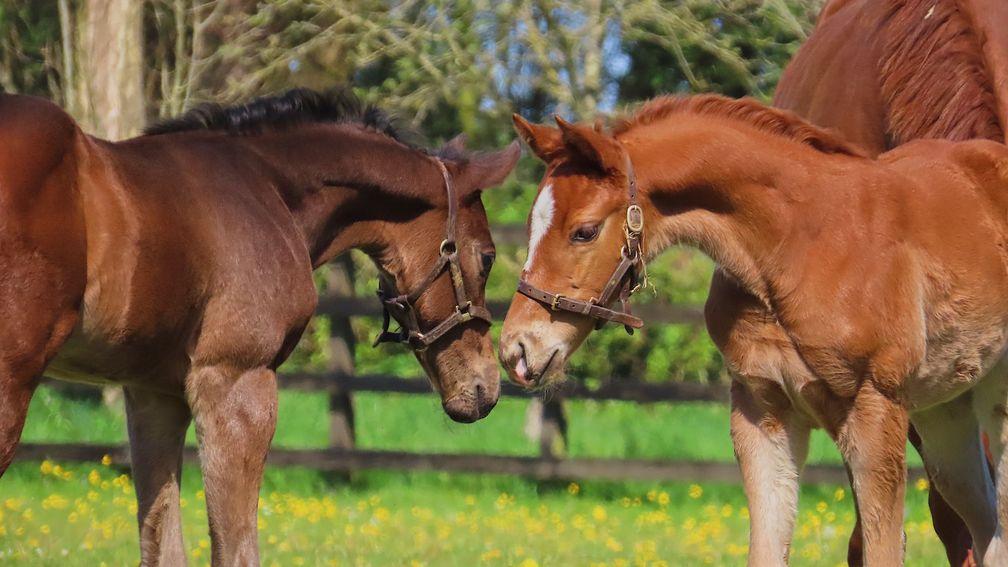
That sort of downstream impact is among the concerns for Fry – not just for his business but for those connected with the production and procurement of racehorses in Britain.
“A business can only survive if it can make money,” Fry says. “Owners are involved in racing as a hobby and it’s an expensive luxury. Owners can only take so much and if the prize-money that is there to help offset some of those costs is an even smaller source of funds, then it’s going to turn people away from the sport.
“It means fewer horses in training, fewer horses being bought and therefore fewer horses being bred. So it’s not just training yards, it's the likes of studs and much more.”
Foal crops are already falling in Britain, before the potential impact of a tax hike. This is putting pressure on the breeding sector, which contributes £375 million to the UK economy and supports 21,000 jobs, according to a study conducted in 2023 by PwC for the Thoroughbred Breeders Association. The report states that the breeding industry is “a critical enabler to the racing programme in the UK”.
The role of point-to-points in the distribution of horses into jumps racing, and as a place for them if not making the grade under rules, is also a key part of the fabric in Fry’s area of the country. However, for the trainer, point-to-points and racing offer far more than what takes place on the tracks.
“The points are mostly run by local hunts, fundamentally as fundraising initiatives for their communities,” he says. “However, I know for a fact that points are not just about the horses and the racing, but are very much a social gathering for members of the rural community.
“You hear talk about the number of pubs that are closing and the pressures on the hospitality business, and losing these in rural areas is cutting down on the opportunities for people to meet and be social. I know loneliness is a big topic of discussion in the farming community.”
Racing's contribution to communities and regional identity is something Innes believes cannot be underestimated.

She says: “Racecourses are very much a hub of their local community and they recognise that through a huge amount of community engagement.
"Ayr, for example, works really closely with Ayrshire Cancer Support. There will be significant unintended consequences from this tax increase, and it’s not all about racing and betting.
“We’ve spoken to Visit Scotland a lot because Scotland has got such a strong identity and we get lots of tourism, which we try to harness. It’s also something that brings the country together. When One For Arthur won the Grand National, he was a national hero. It was all over the papers, front and back, and everyone saw him as ‘Scotland’s horse’ – they still talk about him that way now. Again, it’s a case of that identity of Scotland being used to promote racing.”
Racing's fate will ultimately become clearer on November 26, when Chancellor Rachel Reeves unveils the Budget in the House of Commons.
The consequences of harmonising betting duties, and therefore raising what bookmakers pay on racing, would be felt far beyond the walls of the Palace of Westminster.
Innes says: “The idea that you would damage an institution that contributes so much economically and socially – and certainly in Scotland, thanks to the likes of One For Arthur, Corach Rambler and American Affair [Royal Ascot winner] being a source of massive national pride on a global scale – is so strange. Why are you risking all of this?”
Read more:
Why is there no racing in Britain on Wednesday? The 'strike' explained
Racing must stay united on betting tax threat, warns Jockey Club chief Jim Mullen
Write to your MP about the Racing Tax

Racing TV has created a template letter than can be used to email local MPs about your concerns over the 'racing tax'. Follow this link to access the template – it should not take more than a couple of minutes to complete.
Published on inSpecial reports
Last updated
 Copy
Copy- 'Unfortunately, there is still a bit of a stigma' - but is the tide turning for female jump jockeys?
- British racing is running out of road - and only bold reform can stop it failing
- Affordability checks, the levy and tax - how government policy and gambling regulation have hit racing's finances
- Inside the campaign to ‘neutralise’ racing: how an unlikely alliance in the gambling tax war could spark the sport’s ‘Brexit moment’
- 'We wouldn't be here without the racecourse - it's as big as that, it really is'
- 'Unfortunately, there is still a bit of a stigma' - but is the tide turning for female jump jockeys?
- British racing is running out of road - and only bold reform can stop it failing
- Affordability checks, the levy and tax - how government policy and gambling regulation have hit racing's finances
- Inside the campaign to ‘neutralise’ racing: how an unlikely alliance in the gambling tax war could spark the sport’s ‘Brexit moment’
- 'We wouldn't be here without the racecourse - it's as big as that, it really is'