


There is no misunderstanding - the Gambling Commission is responsible for the confusion caused by affordability checks
Industry editor Bill Barber's weekly take on the key stories from the worlds of racing and betting

There are times when you feel as if you are being asked to reject the evidence of your own eyes and ears.
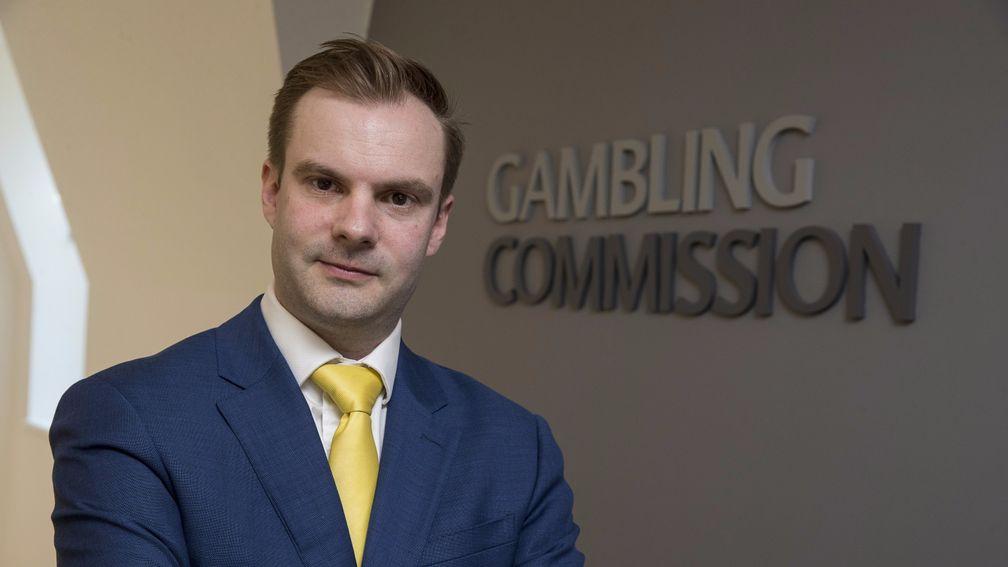
That is how it felt at times after reading Gambling Commission chief executive Andrew Rhodes's response to the criticism the industry regulator received from racing last week.
That criticism followed statistics recently released by the Gambling Commission itself which detailed the falling amount of betting turnover recorded for horseracing in the two years to the end of March. Taking inflation into account, it equalled a £3 billion shortfall.
In a statement backed by a number of British racing's stakeholders, Arena Racing Company chief executive Martin Cruddace accused the Gambling Commission of being "unaccountable and out of control" and referenced affordability measures already in place and checks set to be introduced.
In his letter responding to that criticism, Rhodes said it demonstrated a "thorough misunderstanding of what has been happening and what we are proposing". He added: "For a start there are no current 'affordability' checks in force through regulation and we are not proposing so-called affordability checks. Instead, we are proposing proportionate checks to support the most financially vulnerable customers."
Putting the semantics to one side, it is a regular refrain from the regulator that it never mandated affordability checks. That is despite the Gambling Commission's 2020 Compliance and Enforcement Report, which is still available to read on the regulator's website and states: "Customer protection has continued to be a priority for the commission and consideration of affordability should be a significant driving factor in customer risk assessments."
It adds that "considering affordability is of significant importance to protecting consumers".
Indeed, it tells operators: "Customers wishing to spend more than the national average should be asked to provide information to support a higher affordability trigger such as three months’ payslips, P60s, tax returns or bank statements which will both inform the affordability level the customer may believe appropriate with objective evidence whilst enabling the licensee to have better insight into the source of those funds and whether they are legitimate or not."
An email from Rhodes seen by the Racing Post following a freedom of information request describes the 2020 report as giving the commission "a bit of a headache here".
Nevertheless, he adds: "The industry always seeks prescription, whilst simultaneously telling us the prescription is wrong, and in that report we said that a way of addressing affordability concerns is through payslips, bank statements, etc.
"This was not an instruction but nonetheless I think several have decided this is safer than doing something not suggested by the GC."
Quite how it can be argued that the 2020 report did not include an instruction regarding affordability checks is hard to fathom, and it could be argued that it is responsible for the mess we find ourselves in now.
In June last year Gambling Commission executive director Tim Miller continued to argue that blanket checks had not been imposed but did accept there had been "confusion" for some time about the subject.
That confusion appeared to have extended to the commission's own staff. That same month in an article on the website of law firm Wiggin, the authors said that in their experience in advising in the context of enforcement case work, "we continued to see clear indications in compliance assessments that [at least some of] the commission’s compliance officials consider it a failing not to obtain evidence that customers could afford to spend a few hundred pounds".
In May the Betting and Gaming Council announced the introduction of a new voluntary industry code on customer checks, developed jointly with the Gambling Commission and backed by the government, which would operate until the introduction of the promised "frictionless" system contained in the white paper and clear the confusion.
That announcement also included news that the BGC and Gambling Commission were also working on a new code on anti-money laundering checks, which also triggers requests for documents.
However, there has been little sign of any progress on that code since then, and without it operators will still be asking customers for the same documents.
Cruddace referred to the interim measures having not been implemented "under the guise of anti-money laundering issues".
There was no reference to the anti-money laundering code in Rhodes's response, disappointingly.
A pilot of "frictionless financial risk assessments" is ongoing and it will become clearer whether such things are possible in the first quarter of 2025. At least let us hope so – we do not need any more of the confusion that has prevailed in recent years.
Public health attack on gambling goes global
There was something of a sense of relief among members of the gambling industry after Baroness Twycross gave her speech at last week's GambleAware conference.
The previous week, the Department for Culture, Media and Sport's press release announcing government plans for a £100 million statutory levy on the sector had been written very much in the tone of the industry's harshest critics.
However, on this occasion the gambling minister was very balanced, extolling the benefits of the sector such as the social benefits of a night at the bingo or, shock horror, the fun of a flutter on the horses.

The one area touched upon by Twycross which does look set for further action by the Labour government is that of gambling advertising.
She told the audience that what is appropriate in terms of the volume of gambling advertising needed examination and that discussions would take place with the Betting and Gaming Council in the new year.
The minister stopped short of talking about an outright ban on gambling advertising, something that would not have pleased various campaigners.
A new player emerged in this sphere last week, and not just limited to the situation in Britain, in the shape of the World Health Organisation (WHO).
It issued a fact sheet last week which claimed that estimates "suggest" that 1.2 per cent of the world’s adult population has a gambling disorder.
The WHO also claimed that "rapid normalisation" of gambling was occurring through commercialisation and digitisation, adding: "Sponsorship and marketing are also key factors in rapid global growth."
Among the "universal, population-wide" public health approaches the WHO reckons are required to prevent gambling harm was the ending of "gambling advertising, promotion and sponsorship of sports and other cultural activities".
The question for the gambling industry, and for horseracing, is how many governments will listen.
Barber's bullets
New record for Safer Gambling Week
Last month's Safer Gambling Week 2024 set new records on social media, generating more than 60 million impressions across major platforms X, Facebook, LinkedIn and Instagram, an increase of 21 per cent on last year.
Betting and Gaming Council chief executive Grainne Hurst said: "While we await the details on the number of people using safer gambling tools, past years have shown us that an increase in the number of social media impressions has led to an increase in the use of popular tools – like time-outs and deposit limits – that only exist in the regulated industry."
Sir Philip Davies to chair Star Sports Group
Former Conservative MP Sir Philip Davies has returned to his roots after being named the new chairman of the Star Sports group of companies following the decision of Russ Wiseman to step down for personal reasons. Davies started his working life in his mother's betting shop, Marilyn Davies Bookmakers.
Star Sports founder Ben Keith said: "We are delighted to be announcing Philip as our new chairman. He has a wealth of experience and is a valuable addition to our senior management team."
Gambling participation steady
Overall participation in gambling has remained steady at 48 per cent according to the latest wave of statistics released from the Gambling Commission's Gambling Survey for Great Britain last week.
Excluding those who only took part in lottery draws in the previous four weeks, gambling participation came in at 28 per cent of respondents.
Following lotteries, the next three most popular activities were scratchcards and betting, both at 12 per cent. Participation in betting had increased by three percentage points on the previous period.

Dates for the diary
Tuesday: The 253rd Gimcrack Dinner takes place at York racecourse. Speakers will include John Wallinger, the owner of this year's Gimcrack Stakes winner Cool Hoof Luke, along with Racecourse Media Group chair Conor Grant.
Read these next:
A stark warning for British racing as vested interests continue to undermine progress

Subscribe to Racing Post Members' Club Ultimate Monthly now and get access to award-winning racing journalism with 50% off your first three months. Patrick Mullins led the way when winning the Racing Writer of the Year award at the Horse Race Writers and Photography Derby Awards in London in December and you can read more exclusive content from the best journalists in racing by signing up to Members' Club today.
Available to new subscribers purchasing Members' Club Ultimate Monthly using code MEMBERS24. First three payments will be charged at £24.98, subscription renews at full monthly price thereafter. To cancel please contact us at least seven days before subscription is due to renew.
Published on inOn The Money
Last updated
 Copy
Copy- 'We need more money' Lord Allen tells British racing - and it is on that issue that he will ultimately be judged
- Gambling reform campaigners look to land another blow - but with their customary carelessness when it comes to the facts
- British racing may have won a battle at the budget but the war is still to be won
- Gambling taxes are set to rise in the budget - it's now a question of where and by how much
- The Five Great Myths of the betting tax debate and the One Great Truth - the very real dangers to racing are laid bare
- 'We need more money' Lord Allen tells British racing - and it is on that issue that he will ultimately be judged
- Gambling reform campaigners look to land another blow - but with their customary carelessness when it comes to the facts
- British racing may have won a battle at the budget but the war is still to be won
- Gambling taxes are set to rise in the budget - it's now a question of where and by how much
- The Five Great Myths of the betting tax debate and the One Great Truth - the very real dangers to racing are laid bare