


Fences for courses: clerk Barry Johnson on how Britain's obstacles differ
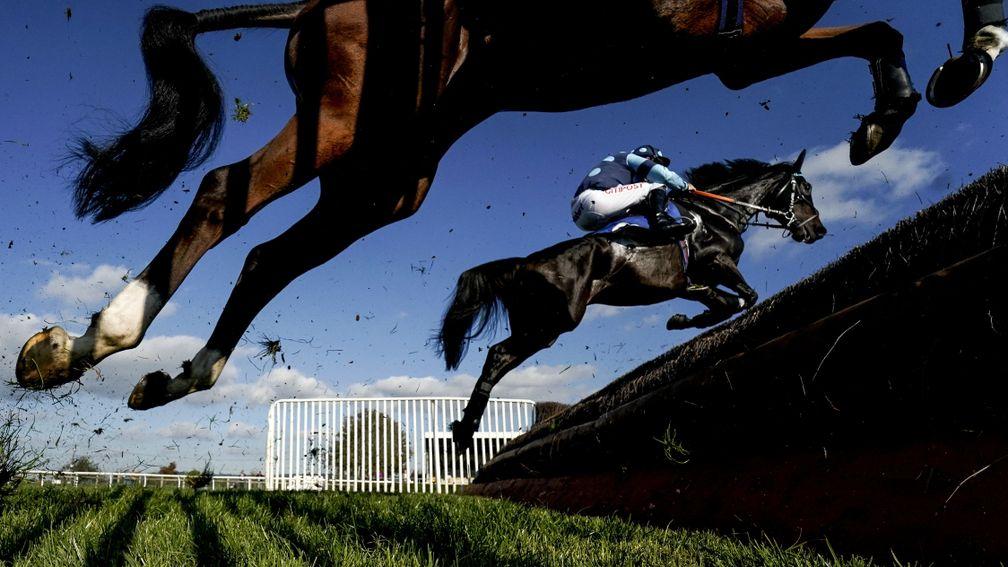
Barry Johnson, clerk of the course at Jockey Club sister tracks Exeter and Wincanton, has highlighted how fences on British racecourses can differ from one venue to another.
The BHA sets out parameters within which racecourses must work in its General Instructions, the subjects covered including the minimum height of fences, which should be at least 4ft 6in, setting to one side the unique Grand National jumps.
Fences also vary in the manner in which they are presented and in terms of whether they are permanent obstacles, such as those at Sandown and Newbury, or portable, which Haydock's became in 2007.

Johnson said: "Fences at all tracks are different. That's one of the things that is wonderful about British racing.
"The fences at Exeter and Wincanton have exactly the same moveable frames, the heights are the same at between 4ft 6in and 4ft 7in, and they are built by the same people. The difference is that at Exeter nearly all the fences are jumped uphill, whereas Wincanton is a flatter, speedier track.
"With the help of jockeys we redesigned the Wincanton fences two years ago and they have jumped so much better.
"We haven't really changed the thickness or style of the fence but we changed their fronts. They now almost have three tiers. Andrew Thornton used to liken them to a triple bar in showjumping. They look and jump better but I wouldn't do the same at Exeter because the fences are taken uphill and are better left as they are."
Explaining why an old fence is stiffer than a new fence, Johnson added: "Building fences is a costly business. We do half of ours every year so that each fence lasts for two years.
"The fences in their first year are always slightly softer than those in their second year. A fence is built with around 250 bundles of birch but in the second year another 60 to 80 bundles of birch will be inserted one stick at a time as the fence will probably have lost an inch in height over the course of a season. By the end of the season a fence might have dropped to about 4ft 5½in."
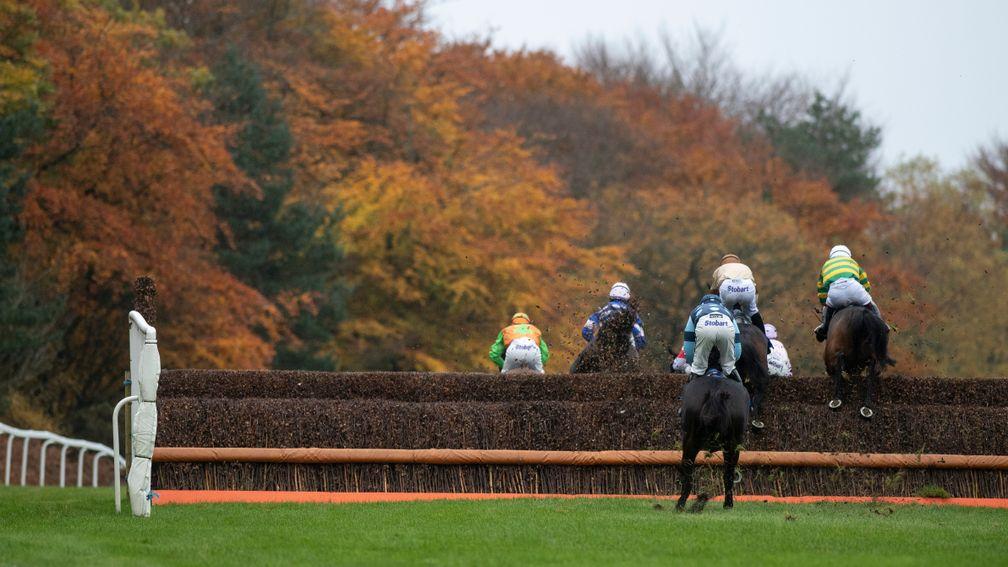
The landing side of Wincanton's fences look slightly different to the old permanent jumps they replaced but Johnson feels nothing meaningful has been lost.
"I don't personally believe there is a difference between portable and permanent fences," he said. "For tracks like ours portable fences give us the option of moving them on to fresh ground, which is a massive help."
Less positive in that regard is leading rider Harry Skelton.
"I would always much prefer to jump a fixed fence than a portable fence," said Skelton. "Portable fences probably get bashed around a bit more because they get moved and become supple. They then maybe don't jump as well, perhaps because the birch becomes loose."

Look back on the best action of the year in the new edition of the Racing Post Annual. Order now at racingpost.com/shop or call 01933 304858
Published on inNews
Last updated
 Copy
Copy- How to add Racing Post as a preferred news source in Google
- Moray Smith Live: put your questions to the pro punter for a special Christmas Q&A
- It's your LAST CHANCE to get 30% off Racing Post+ for a whole year - don't miss out on all our fantastic content!
- 'Absolute nonsense' to claim Haiti Couleurs was out of his depth in Betfair Chase
- Catterick: 'I loved him straight away' - hurdles debutant Indian River makes winning start for Adrian Keatley
- How to add Racing Post as a preferred news source in Google
- Moray Smith Live: put your questions to the pro punter for a special Christmas Q&A
- It's your LAST CHANCE to get 30% off Racing Post+ for a whole year - don't miss out on all our fantastic content!
- 'Absolute nonsense' to claim Haiti Couleurs was out of his depth in Betfair Chase
- Catterick: 'I loved him straight away' - hurdles debutant Indian River makes winning start for Adrian Keatley