


Inside the campaign to ‘neutralise’ racing: how an unlikely alliance in the gambling tax war could spark the sport’s ‘Brexit moment’
Lee Mottershead investigates how racing and gambling reformers have forged an uneasy coalition


It has been a year in which a number of exceedingly strange things have happened.
At Cheltenham in March 100-1 shot Poniros won the Triumph Hurdle on his jumping debut. Four months later, Qirat, a humble handicapper working as pacemaker to Field Of Gold, claimed the Sussex Stakes at 150-1. Sandwiched by those oddities was a different sort of shock.
It occurred on May 14, Musidora day, although not at York. In a Westminster conference centre, a group of campaigners previously regarded as foes, not friends, of British racing met with hand-picked representatives of the sport for a roundtable discussion. Racing attendees were led by BHA acting chief executive Brant Dunshea and Arena Racing Company boss Martin Cruddace. Sitting around the same table were James Noyes and Matt Zarb-Cousin, both poster boys for the overhaul of gambling regulation that has already cost racing a king's ransom.
For both, the stakes were high – and both sides needed allies. British racing, already dealing with a £3 billion black hole caused by stricter gambling regulations, was (and remains) desperate to avoid being hammered by tax hikes in the government's forthcoming budget. Economic analysis commissioned by the BHA showed the Treasury's proposal to harmonise remote gambling duties could cost the sport at least £66 million a year, a catastrophic prospect after years of being battered by affordability checks.

Feelings were equally as strong within the campaigners' camp, which ironically included many of the foremost proponents of affordability checks. They felt regulatory changes detailed in the 2023 gambling white paper had not gone anywhere near far enough, particularly in terms of curtailing online casino and slots, and now saw an alternative means to hit the bookmakers via swingeing tax hikes on gaming. For them, harmonisation, which might leave casino betting untouched, was a distraction from the real issue.
In short, there was an opportunity to strike a most unlikely alliance between the gambling reform lobby and the very sport that had been its most trenchant and effective opponent.
How to neutralise racing
The roundtable was organised by the Social Market Foundation, a think tank whose senior fellow Noyes assumed the role of chair. Five years ago Noyes was chief author of the SMF report that called for affordability checks to be set at £100 a month, arguing: "Gamblers should be free to spend more than this threshold – but only after they show that their gambling is neither unaffordable nor harmful."
Not present in person at Westminster was arguably the most significant of all the figures in the campaign against gambling. Derek Webb, a former professional poker player who made $25 million by devising and selling the rights to Three Card Poker and who was last year described by The Guardian as a "poacher turned gamekeeper".
The founder of the Campaign for Fairer Gambling pressure group, he has pumped chunks of his fortune into efforts to tighten gambling regulation and increase gambling taxation. Webb, who enjoyed a considerable victory when maximum Fixed Odds Betting Terminal stakes were reduced to £2 from £100, is also a major donor to the Labour party, and in recent months has been an increasingly public figure arguing for tax increases and insisting that racing should distance itself from bookmakers.

Webb also gave financial backing to roundtable organisers the SMF, which wanted to show the government it was actively consulting with racing before delivering its response to the Treasury's harmonisation proposal. Representatives of the Treasury and Department for Culture, Media and Sport were observers at the meeting, whose attendees also included politicians supportive of both racing and gambling reform.
Also on the guest list was Lee Keys, a professional racing punter who hosts a racing podcast called the Barstewards Enquiry. In a podcast episode aired in December, Keys interviewed Zarb-Cousin, a recovered gambling addict who co-founded Gamban, a company that seeks to help those suffering from gambling-related harm by blocking access to gambling websites and apps, and another central player in the tax campaign. More recently, Zarb-Cousin, a left-wing political activist, has called for the banning of greyhound racing.
"After I went on the podcast, people reached out and offered to help," says Zarb-Cousin. "They didn't want to be named, and there were no commercial relationships, but they told me who I needed to speak to. It was a question of wanting to mobilise people."
The importance of these relationships was referenced in an email sent by Zarb-Cousin on January 8 that explained his tactical thinking in candid terms to fellow reformers.
The email referenced a meeting with Horseracing Bettors Forum chair Sean Trivass and the hope they could work together on efforts to force bookmakers to offer online casino gaming on a separate platform to traditional betting. Zarb-Cousin wrote: "Even if it doesn't prevail it'll peel off and neutralise racing, which has been used by the BGC [Betting & Gaming Council] (enabled by the BHA) to water down affordability checks to the point where they're ineffective at reducing harm associated with casino but . . . are negatively impacting racing."
Asked about that comment, Zarb-Cousin told the Racing Post: "Racing was indeed used by the BGC for its own commercial ends. Racing is extremely influential and, as I have consistently argued, has undersold its influence. Of course, the weaponisation of racing by the bookmakers, with the objective of preventing controls on its online casino product, needed to be neutralised."
A day at the races
Engagement with the Barstewards Enquiry was, at one stage, a significant component in the plans to "neutralise" racing, acting as a vehicle through which the campaigners' message could reach racing punters. The December episode with Zarb-Cousin was titled 'Peace In Our Time', seemingly reflecting the podcast's past criticisms of the reform lobby and a willingness to revisit the relationship. More recently, the podcast devoted a special August episode to a 50-minute interview with Webb.
One key event was a raceday at Thirsk on April 12, at which the Barstewards sponsored races. It was hoped this would afford the opportunity for engagement with racing professionals and politicians, and plans were even explored to fly Reform UK's Lee Anderson in by helicopter.
Not revealed at the time was that funding for the sponsorship came not from Keys or his podcast producer wife Jess, but from within the campaign group.
"It was sponsorship, months after I had appeared on the Barstewards podcast," says Zarb-Cousin. "Its purpose was for an event at Thirsk linked to the campaign. You try to create moments in a campaign and I wanted to do more events. We wanted to get MPs and trainers there. We wanted to do outreach."
Asked if the Thirsk day was a successful part of the campaign, Zarb-Cousin says: "Some events help move things forward more than others."
The Thirsk raceday was intended to be a precursor to the roundtable, one of whose contributors was Tom Savill, son of former BHB chairman Peter Savill and a director of his father's Plumpton racecourse.
"There’s now a recognition that you can be concerned about problem gambling and still want racing to thrive," says Savill, expressing an opinion supported by HBF chair Trivass, who also attended the meeting.
"There has always been a view in racing that we shouldn't speak to anti-gambling people, but there is a difference between anti-gambling and anti-gambling harm," argues Trivass.
"Bookmakers shut down accounts and tell us nothing more than it's a 'trading decision'. It's because they aren't talking to us that they have begun to be seen by punters as an enemy. Racing could have become the enemy of the anti-gambling harm groups if we had chosen not to speak with them.
"My personal disappointment, which I've relayed to the BHA and James Noyes, is I hoped the roundtable would be the first step and that there would be future meetings. To my knowledge, things haven't progressed as I hoped they would."
What has developed is the position taken by the SMF, whose office is coincidentally in the same Millbank building that is home to Arc. In its submission to the Treasury – subsequently backed by former prime minister Gordon Brown – the SMF called for remote gaming duty to be increased from 21 per cent to 50 per cent.
It also advocated doubling bookmakers' levy contributions to 20 per cent and reducing racing's betting duty by two thirds to five per cent in order "to provide the funds needed for British horseracing to remain sustainable". The SMF recommended that general betting duty, which applies to other sports, should rise from 15 per cent to 25 per cent.
While the National Trainers Federation offered public backing to the SMF position, the sport's official line is simply to urge the government against harmonisation and therefore to "axe the racing tax". That will be repeated on Wednesday, when British racing will go dark to highlight the threat to the sport, with no meetings taking place and a campaign event being staged at the Queen Elizabeth II Centre in Westminster.
"The SMF proposals landed particularly well with trainers, racecourses and owners," says Zarb-Cousin, who will be attending Wednesday's rally. "The BHA has shifted its position as a result, perhaps not as much as others in racing we're engaging with, but it's clear to me racing is now speaking much more with its own voice."
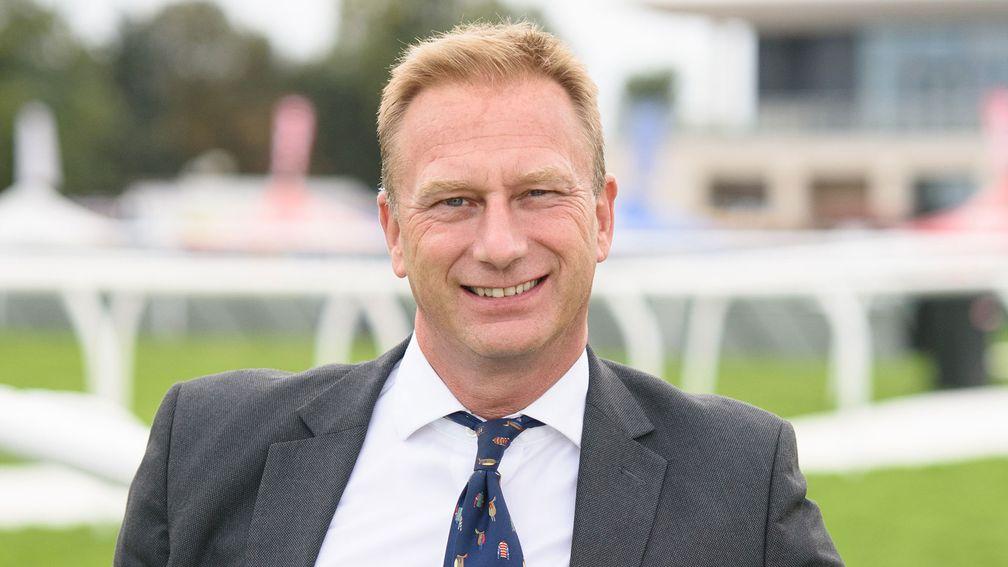
Cruddace's voice is clear. "Our position is quite simple," says the Arc boss. "Because of the incredible contribution betting makes to UK racing, it is important UK racing continues to be taxed and regulated differently from gaming products such as online slot machines, and that the current tax burden of 25 per cent [across levy and betting duty] does not increase.
"The gaming companies are worth billions and have billions of revenues. Other sports have billions of non-betting related income. Notwithstanding that, a strong UK sports betting industry is preferred; it is not for us to opine on the tax rate of other products. Those gaming companies and sports are well capable of looking after themselves."
Cruddace adds: "We tend not to get hysterical on whether think tanks agree or disagree with us, but it is perverse we should somehow change our position because a number of those influential voices agree – at least on the principle – with us.
"Our strategy of persuading the government not to increase the tax on UK horseracing remains our clear and primary focus. It is truly great that the whole UK horseracing industry is coming together with a clear vision of what it wishes to achieve."
Like Cruddace, Dunshea disputes any suggestion racing has embraced groups hostile towards the gambling sector.
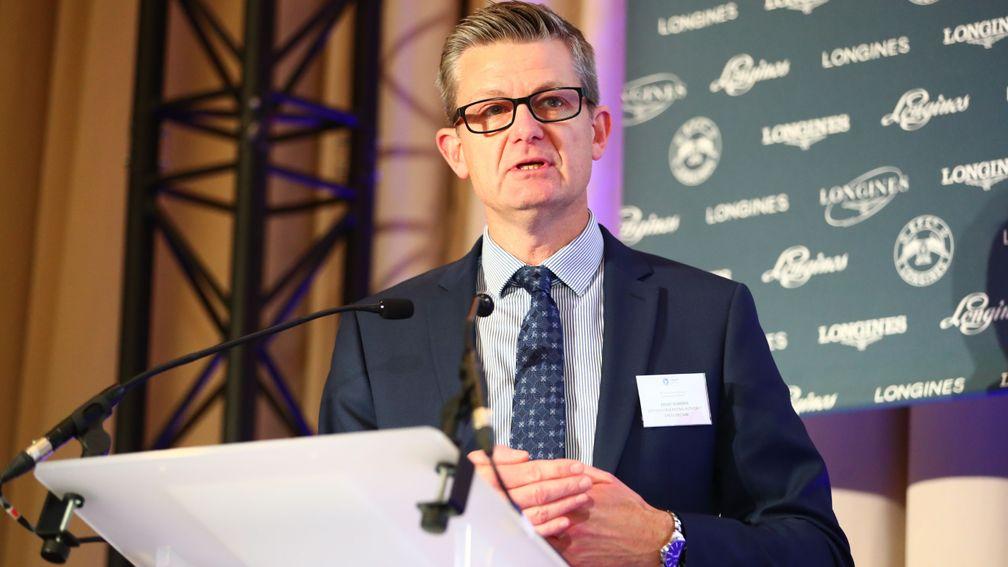
"History has shown that engagement and transparency with critics is central to an industry maintaining its social licence," says Dunshea.
"Any modern and progressive industry must be able to engage with those that have opposing views, and it is logical to engage various bodies when making our case heard, including respected think tanks and third-party advocates. However, this does not equate to racing forming a closer relationship with any such bodies. This is especially the case as regards the anti-gambling lobby.
"We acknowledge there will always be some within the industry who hold differing views, but the sport's decision to focus on racing and not lobby for an increased tax rate for other gambling products represents the sport's centrally agreed policy.
"I would like to make it clear to stakeholders and the betting industry that we are singularly focused on ensuring that betting taxes are not harmonised and that horseracing remains taxed at a different, lower rate to other products. This has been the sole focus of our campaigning and lobbying efforts."
Racing's Brexit moment
That might sound like an attempt to mend relations with the betting industry. Highlighting how damaged those relations have become, Flutter UK's strategic racing director Seb Butterworth says: "It has been concerning to see senior figures in racing align with anti-gambling campaigners who have no genuine interest in the long-term future of the sport and are openly calling for bans in other areas, such as greyhound racing.
"Gambling operators provide more than £400 million in funding every year. Higher taxes will put pressure on investment and jobs, and undoubtedly force more shop closures, impacting key income streams such as media rights and levy. Racing and bookmaking are strongest when we work together."
Zarb-Cousin, meanwhile, is adamant racing and the gambling reform lobby have been working in harmony.
"The relationship has enabled racing to put forward a much more credible proposition," he says. "Another positive aspect of this alliance is the All-Party Parliamentary Group on gambling harm has broadly come in behind the tax proposal and supported racing de facto, which is brilliant. That is a powerful and influential group of MPs that is basically on the same page as the All-Party Racing and Bloodstock Group.
"Forming an alliance with racing helped us, but I also think we've helped racing. It has been a mutually beneficial situation."
There are, though, some who fear this is a marriage of convenience in which one party will eventually abandon the other once their objectives are achieved.
"Sincerity isn't really the point," says Savill. "What matters is whether their current position helps protect the future of the sport. We can't control what they might say two to three years from now, so the pragmatic approach is to take the support as it comes and keep making the case for racing on its own merits."
Others are more cautious.
"Will they come after racing once they've dealt with slots and casinos?" asks Trivass. "If we had another meeting with these guys, I would want to ask them, 'Is this the end of it? Are you prepared to give a guarantee in writing that you're not going to come back to get us in the future?'"
Trivass continues: "If bookmakers get massively hit with new taxes on slots and casinos, they will tweak racing bonuses, overrounds and extra places, and shut a few more accounts. If the outcome of this is that racing is made increasingly less attractive to punters, the people who are trying to avoid gambling harm may end up pushing more people towards losing money.
"You would also imagine that if their proposals manage to bring down the number of problem gamblers using slots and casinos in the regulated market, the number of problem gamblers betting on racing is bound to increase as a percentage of the overall number. Will they argue that while racing's percentage was low they were happy but after it increases they will come back for us?"

If Chancellor Rachel Reeves does hike remote gaming duty in her November 26 budget, another uncertainty is the extent to which bookmakers will look to reduce media rights payments in future. Given the enmity that has developed between sections of racing and bookmaking, it is hard to believe those negotiations – never mind resurrecting levy discussions – will be easy.
"This is racing’s Brexit moment," says a senior gambling industry source. "They’ve been promised a land of milk and honey by campaigners who despise gambling and want racing to divorce from their biggest economic partner – bookmakers.
"The campaigners have promised they can end affordability checks, deliver a massive levy fund and extra prize-money on top. What if Rachel Reeves ups tax and none of these promises come to pass? It’s one hell of a gamble by the very people who now apparently don't like games of chance."
Not all of British racing's senior leaders would agree with that characterisation. While some have been keen to distance themselves from bookmakers, others – like new Jockey Club chief executive Jim Mullen – are minded to build bridges.
Separating the two sides is a well-funded campaign lobby that has spent months wooing a sport inextricably linked to the gambling industry it views with disdain. Among the promises dangled in front of racing has been the prospect of a future affordability checks carve-out for the sport.
"Let's get this tax thing out of the way and then we can hopefully start doing more on the issue," says Zarb-Cousin, his focus fixed firmly on the battle over taxation.
The caveat in Zarb-Cousin's words may be telling. If anti-gambling campaigners win their tax fight, will they continue to fight for racing's own objectives or abandon the sport?
What follows on November 26 will test whether this unlikely alliance was a sound bet, or whether racing allowed itself to be used by old enemies.
Read more . . .
'We wouldn't be here without the racecourse - it's as big as that, it really is'
Racing must stay united on betting tax threat, warns Jockey Club chief Jim Mullen
Illegal bookmakers now control nine per cent of UK market, explosive black market report claims

Subscribe to Racing Post + Ultimate now
Published on inSpecial reports
Last updated
 Copy
Copy- 'Unfortunately, there is still a bit of a stigma' - but is the tide turning for female jump jockeys?
- British racing is running out of road - and only bold reform can stop it failing
- Affordability checks, the levy and tax - how government policy and gambling regulation have hit racing's finances
- 'Why are you risking all of this?' - racing's enormous economic and social contribution to the UK
- 'We wouldn't be here without the racecourse - it's as big as that, it really is'
- 'Unfortunately, there is still a bit of a stigma' - but is the tide turning for female jump jockeys?
- British racing is running out of road - and only bold reform can stop it failing
- Affordability checks, the levy and tax - how government policy and gambling regulation have hit racing's finances
- 'Why are you risking all of this?' - racing's enormous economic and social contribution to the UK
- 'We wouldn't be here without the racecourse - it's as big as that, it really is'