


'I went through shock, grief for the life that's stopped, fear for the future – then in the blink of an eye Racing Welfare put their arms round me'
Peter Thomas explores the remarkable work done by Racing Welfare at the end of a year in which the charity turned 25


It's the turf's lucrative change of seasons, between the ongoing international jamboree on the Flat and the upcoming attractions of Kempton and Leopardstown over Christmas, and the prize-money is washing over the sport in swelling tides of various currencies. For those at the top of the food chain, the rewards are huge and conspicuous, but for the large majority of racing's players, the small but significant cogs in the machine, dreams of riches such as these were abandoned long ago.
Most of them, of course, get along just fine, but for the rest, it's a matter of how best to deal with the reality of lowered expectations, to cope physically and mentally with the early mornings, harsh winters, hard graft and the ever-present threat of serious injury.
Which is where Racing Welfare steps in, and has done for the past 25 years, having this year marked a quarter of a century of offering a safety net that is surely unsurpassed in any other major industry. The challenges it faces have shifted and grown, but the essence of its work remains the same: identify those in need in racing and help them; help them to come forward and help them through the hard times.
Dawn Goodfellow, Racing Welfare chief executive, has been with the charity for the past ten years, after arriving from the Northern Racing College, and has seen old problems growing, new ones appearing.

"Before I arrived," she explains, "anecdotally it was felt they saw a disproportionate number of white men, 40-plus, particularly with addiction problems, and that a major cause was that a lot of people went into racing because they wanted to become jockeys, while of course only a tiny fraction of those people ever even get a licence to ride, and they could then become stuck in their careers.
"We work in an industry with quite a tough culture and the mantra you hear is that you need to toughen up if you want to work in it, but actually operating in a modern society, racing needs to step towards those people rather than expecting them to toughen up.
"Now, as attitudes change, the area we've seen growing most is poor mental health, the same as society as a whole, but our biggest spend is still on physical health.
"We operate in a dangerous business and if we have someone who has a bad head injury that can be an extremely expensive thing to have to support but our aspiration would be the growth in wellbeing and recognition across our industry as a whole."
'The pain got worse, throughout my entire body'
Emily Dorman-O'Gowan is a perfect example of a person whose life in racing hit the buffers, leaving her with physical and mental issues that scared her half to death. As a single mother in her late forties, she faced problems that came into sharp focus as her health and employability suffered.
Like many, having been previously resilient and independent, she was unsure what help she might be entitled to, but Racing Welfare were there with information, practical support and financial help – to her surprise and relief.
The trouble began with two freak accidents in quick succession in Cheltenham Festival week this year, the first when she was caught out by a horse – on Monday morning after a few days of box rest – "erupting like Vesuvius" at the bottom of the gallops and smacking her in the face with the back of its head. Just 72 hours later, having shrugged off the first injury, her mount was startled by a tractor on a country road, reared up, clambered over a hedge and dumped her on the ground, where she hit her head with a vengeance.
"I rang the yard, told them there was a loose horse and then walked home, seeing stars," recalls Dorman-O'Gowan, "but about three days after that I started feeling quite unwell, and when I had to do a piece of work on a horse I'd ridden many times before, I just couldn't hold him.
"After various routine tests I discovered I'd detached a ligament in my neck, so I was in a collar for six weeks, but the pain got worse, throughout my entire body, and the spinal consultants couldn't work out what was going on. I was desperate, really low, and then my GP said I probably had fibromyalgia [an incurable long-term condition], triggered by the head smacks."
There were no outward signs of disability – no wheelchair, no crutches, no stick – and Dorman-O'Gowan felt reluctant to reach out for help, but she was left unable to do her job, with bills to pay and a child to support. Like most of us, she wasn't sure what was out there to help her.
"I went through shock, grief for the life that's stopped, fear for the future," she says. "I was really worried because I didn't know how the benefits system worked, so I rang Racing Welfare, and then out of the blue a few days later [welfare officer] Lucinda Gould rang me and asked me what was going on.
"In the blink of an eye, they put their arms round me, and I have never known a support network like it. I was feeling isolated, bewildered and full of uncertainty, but they've held my hand all the way through."
When Gould organised physio sessions, paid for by Racing Welfare, Dorman-O'Gowan "just burst into tears”.
She adds: “I couldn't believe there was an organisation, a charity, that was prepared to step up and offer that support. Lucinda said they could offer me counselling, and this wonderful woman called Karen Ladym turned up, whose therapeutic approach and delivery made me feel completely heard and understood.
"They said they could put me in touch with careers and look into retraining. When it transpired that physio wasn't the best option, they referred me to a specialist – who I could never have afforded on my own – to work out a pathway forward.
"I've coped with quite a lot in my life and I'm a survivor, but without Racing Welfare I don't think I'd be talking to you today. Things got really black, but they got me through it."
'These awful accidents can feel like the end of the world'
The Racing Welfare approach these days is to employ welfare officers who are racing people, so Lucy Miller, now regional welfare manager in the north, was a shoo-in, with her background in pony racing and point-to-pointing in the Scottish Borders. She worked for smaller racing yards and gained the kind of experience that meant she understood the problems facing the people she wanted to help.
After gaining a degree in criminology from the University of Stirling, she set off down a career path in the 'third sector', soon finding that Racing Welfare was the perfect fit for her passions in the fields of charitable work and racing. After eight years of helping to establish the charity's presence in Scotland, she derives more and more pleasure from developing the forward-thinking elements of a sport that is often labelled as being rather "stuck in the past".

"For a huge majority of people in it, racing is an ingrained lifestyle choice," says Miller, "and while it's often unfairly accused of having more issues than most, it has a great family mentality – we're very good at looking after each other and we're very lucky now to have the mechanisms to do that, to make racing a most attractive sport and occupation to be in.
"A lot of riders riding two-year-olds in all weathers are doing it because they love it, but we have to recognise the risks and be there for them when things do go wrong. Racing is looking out for them and that's something we need to be proud of and talk about."
The examples of this progressive approach to a very traditional sport are many and multi-faceted, but Miller highlights a typically satisfying case.
"A young girl we did a lot of work with came off a horse at work and had a head injury, and it was soon obvious she wasn't going to be able to ride again. We helped her with a lot of rehab, physios, neurophysios, speech and language therapy, but she also wanted to stay connected to the industry, so when she was physically in a much better place, we worked with her on some career development and supported her with a grant for training in equi-massage.
"It was a good way forward and she reflected that if she hadn't known about us, hadn't found a person to believe in her and encourage her, she didn't know where she'd have been mentally, and of course that support aided her physical recovery as well.
"These awful accidents can feel like the end of the world, but we try to give people hope and support, to empower them to untangle their problems. Sadly, it was only when she was in a really dark place that she got in touch with us."
'There are umpteen careers within this industry'
Unfortunately, awareness of Racing Welfare isn't always as it should be. As Miller says, the amazing team on the ground is there, volunteers and staff, but "people often see us as being about crisis intervention, they only come to us when things are really bad”, when the reality is different.
“We want to get away from that,” she says. “We want people to be coming to us so we can work with them to improve their wellbeing, make sure they're thriving at work, to help them through those small life challenges before they get to crisis point.
"We need to be at the forefront of people's minds when they have a niggly back pain rather than when they're signed off work for three months. There's always something we can do – we encompass everything, all life's challenges, even just somebody to chat with, because not everybody has that person."
Goodfellow, likewise, is proud of the progress that has been made and the efforts of the teams in the field, but her biggest challenge remains that of getting the Racing Welfare message out to those who most need to hear it.
"You may work in a yard and gain all that knowledge and experience, but by your mid-20s are feeling fed up of riding yearlings in February, or you're hitting mental or physical challenges, " she says. "But there are umpteen careers within this industry that you could move into, and I don't think we've always been very good at helping people to see those lateral opportunities.
"People can become very focused on the idea that all they know is riding horses or looking after horses, when of course in that time they've built up a huge number of transferable skills and their progression doesn't have to be over."
Racing, she believes, welcomes Racing Welfare, but not enough people know it's there or what it's for.
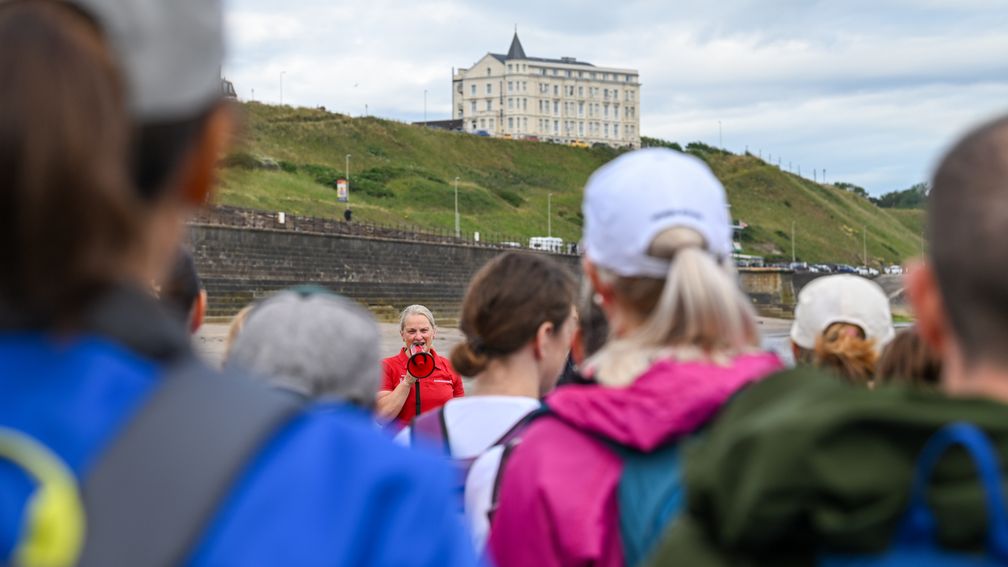
"We don't provide specialist services but our officers are all very skilled and knowledgeable in terms of where to go to find the appropriate, relevant support," she says. "They might have relationships with the local drug and alcohol statutory services, the local housing authorities, they'll all be benefits-trained, to make sure a person is claiming all they're entitled to before we revert to charitable funds.
"It's not for us to hold people's hands for the rest of their lives, it's to get them on to a sustainable footing and help them with the right choices, but we need people to know the help is out there."
The organisation is wholly charitaby funded and has a fundraising team working away constantly to raise the £3.5m a year it needs just to stand still.
"They're looking for grants from charitable trusts and foundations, which would be the greater part of our funding," explains Goodfellow, "but also from high-net-worth individuals committing to several years of funding – which has gratifyingly been going well – corporate support and community fundraising, where people run marathons and throw themselves out of aeroplanes.
"But for us, like everybody else, charitable fundraising is hard work at the moment, and the changes the government made to employers' National Insurance contributions made a difference of £35,000 to us, and that's effectively the cost of a welfare officer."
'There are a lot of people who really care'
Anyone who has earned more than 75 per cent of their living from the racing industry is entitled to support from Racing Welfare, "and my greatest aspiration would be for the industry more generally to understand what we do and why we're there", says Goodfellow.
"My main ambition is to ensure that everybody in racing understands exactly what's available to them and celebrate that."
Or, as Dorman-O'Gowan puts it: "When things got bad for me, I was so confused that when I found the number on the National Trainers Federation website I thought I'd call, and it opened a far bigger door than I expected.
"My message would be never to underestimate either your worth or how much help there is, and I hope that every trainer, anyone who has staff, or for their own sake as well, will make sure the Racing Welfare number is up in every tack room in every yard in the country."
It's another small step on the road to making sure racing's people are looked after in the way they should be, with the sport leading the way in the field of welfare for another 25 years and beyond.
Racing Post+ Ultimate subscribers can read more fantastic features here:

Sign up to receive On The Nose, our essential daily newsletter, from the Racing Post. Your unmissable morning feed, direct to your email inbox every morning.
Published on inSpecial reports
Last updated
 Copy
Copy- A corruption case like no other: inside the Hillsin investigation that brought down Dylan Kitts and John Higgins
- 'Jockeys would be really terrified' - the group born in secrecy and fear that proved riders can do much more than sit on horses
- Inside the £5.9 million overhaul that racing professionals can’t use, can’t contact and can’t stop paying for
- 'Unfortunately, there is still a bit of a stigma' - but is the tide turning for female jump jockeys?
- British racing is running out of road - and only bold reform can stop it failing
- A corruption case like no other: inside the Hillsin investigation that brought down Dylan Kitts and John Higgins
- 'Jockeys would be really terrified' - the group born in secrecy and fear that proved riders can do much more than sit on horses
- Inside the £5.9 million overhaul that racing professionals can’t use, can’t contact and can’t stop paying for
- 'Unfortunately, there is still a bit of a stigma' - but is the tide turning for female jump jockeys?
- British racing is running out of road - and only bold reform can stop it failing