


'This would be the third part of a triple whammy' - BHA chief Brant Dunshea on why racing must be treated differently in tax fight
The BHA boss tells industry editor Bill Barber racing's case is very simple


British racing has faced challenges before which have necessitated shutting down the sport, but has never done so in circumstances like those that have led to Wednesday's blank day.
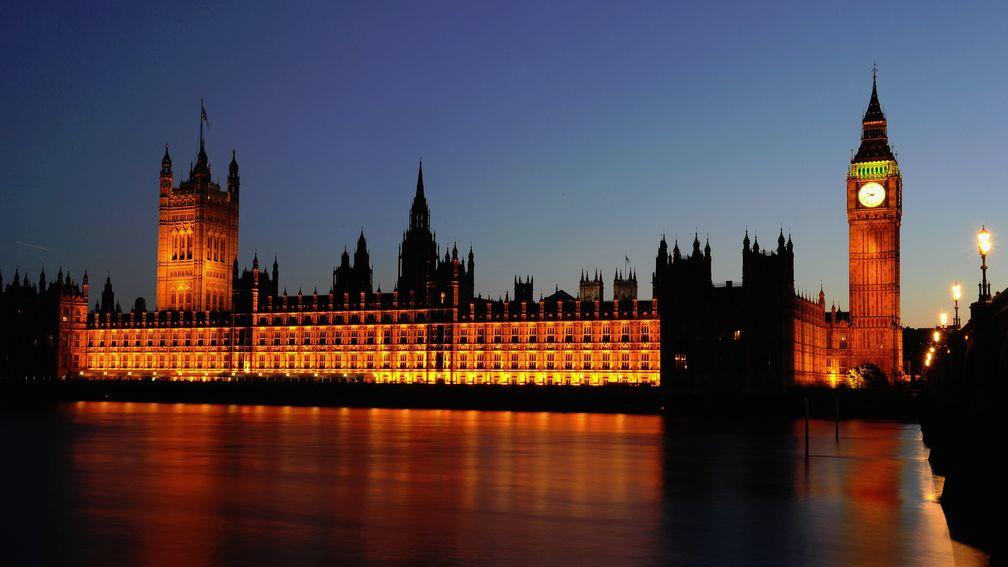
It is a day which the BHA's acting chief executive Brant Dunshea describes as "significantly important" as racing comes together in Westminster to press its case against the Treasury's proposals to harmonise online gambling duties, which the sport believes could have a devastating impact.
Dunshea says: "It's the first time the sport has voluntarily agreed to come together and not race to create the space for us to argue our case directly to the heart of government. We see it a central part of our overall campaign that has been running over the past few months and will carry on right up to the budget."
Dunshea believes the message racing is sending to the government is clear.
"We are the second most-attended sport, we employ people nationwide but also we are already facing other financial threats around the levy and affordability checks. We can't risk our country falling behind compared to other nations," he says.
British racing launched its campaign to 'Axe the Racing Tax' in July and followed that up last month with the news that it would be cancelling all meetings on Wednesday.
"I think the amount of coverage we got during that period when we announced this day of action is quite extraordinary, and I'm talking not just about racing press but broadly across mainstream media," Dunshea says. "We believe the campaign is getting cut through."
Economic analysis carried out for the BHA has shown the government's proposals would result in a £66 million hit for racing's revenues in the first year and put more than 2,700 jobs at risk.

Dunshea says: "We are already under financial pressure. This would absolutely be the third part of a triple whammy and we just cannot rest on our laurels. We have to continue to help ministers understand that this is across the country in all those regional communities that bring racing together and support their own local businesses.
"Any loss of jobs, any reduction of revenue that's distributed right across the country in terms of our sport would be potentially catastrophic."
Dunshea believes the number of times the issue has been raised by parliamentarians demonstrates the sport has support in Westminster, and he praises the work of the All Party Parliamentary Group for Racing and Bloodstock.
He adds: "There is an understanding of the importance of our sport in Westminster, albeit we acknowledge we are in a very challenging fiscal environment for the government to have to deal with.
"But we say that, and we keep saying this to ministers, they have to think about the unintended consequences of this. In a fiscally challenged environment it's very easy to just say there's an industry that we can generate some further revenues for the exchequer there.
"If that policy ends up leading to unintended consequences that ultimately erode government's ability to generate tax revenue then it's a counter-productive policy."
Dunshea says racing's case is very simple. He adds: "We say no to harmonisation, we are opposed to it and we say that British racing must and should be treated differently to other products, other forms of gambling, for all the reasons that I previously articulated around what British racing does for the broader economy, as part of Britain's soft power.
"We have to be treated differently because we are different."
The debate over tax harmonisation appears to have produced tension between the gambling industry and racing as some within the sport have offered support to proposals that would produce a major hike in the duty paid by operators on remote gaming.
However, Dunshea insists that dialogue continues between the two sides. He adds: "We value our relationship with betting operators. We really appreciate their support and we want to work collaboratively to the mutual benefit of the industry and the sport."
This year's budget is taking place later than originally expected on November 26 which means the campaign to challenge the government's tax proposals will go on for some time yet.
The BHA will have a team deployed at the forthcoming party conferences, while Dunshea said that director of communications and corporate affairs Greg Swift and colleagues would continue to have direct engagement with officials at the Department for Culture, Media and Sport, Treasury and individual MPs.
"There is still plenty to come in terms of campaign activity," he adds.
The tax harmonisation proposals have dominated the governing body's attention since the Treasury launched its consultation at the end of April and that issue has meant the subject of affordability checks has retreated into the background.
The Gambling Commission is in the midst of testing so-called frictionless financial risk checks and Dunshea says the BHA is committed to ensuring full transparency around that pilot.
He adds: "At the end of the day we recognise that having genuinely frictionless measures in place to protect those that may be more vulnerable from a gambling harms perspective is an appropriate thing to have in place.
"But what we say is they must be genuinely frictionless and must not have unintended consequences which affect the consumer's engagement with the sport, that turn them away from the sport and ultimately affect the sport in terms of its revenues."
Talks with the betting industry to resurrect the subject of levy reform are also on hold due to the tax consultation.
Dunshea says: "We understand the betting industry is not going to be in a position to be able to continue discussions and negotiations around the levy at a time when there is uncertainty around what is happening with tax."
Given the threats facing British racing it would be easy to assume the outlook is gloomy for the sport, but that is not the way Dunshea sees it.
He points to encouraging results emanating from 'The Going Is Good', the multi-million pound marketing campaign launched this year and, linked to that, the findings of Project Beacon, the most extensive consumer insight survey ever conducted by British racing.
"This narrative that we are in crisis and there has been a lack of leadership is one I think is somewhat misplaced," Dunshea says. "Let's think about some of the green shoots at the moment.
"We have got the biggest and first marketing campaign for some time. We have seen the readout at the halfway point of the impacts of that and I think you just need to see the published attendance figures, it is clear this is contributing to those really positive numbers. It is definitely cutting through and that is really pleasing."
Dunshea describes Project Beacon as "one of the most impressive pieces of work" he has seen in his time in racing.
He adds: "That piece of work has come to its conclusion and we are now working through developing the implementation plan, the key jobs to be done across the sport.

"We have two of the top five horses in the world, we have the best jockeys in the world. We are still the best. There's lots of really positive things happening at the moment to be optimistic about."
The BHA has had its own internal issues to resolve this summer which resulted in Lord Allen belatedly taking up his position as chair of the governing body which has begun the process of moving to a fully independent board.
"That work continues and we are committed to getting through that process as quickly as we can," Dunshea says. "I can see a place where we should be with a new independent board this side of Christmas."
Dunshea himself has been acting chief executive of the BHA since the start of the year when he took over from Julie Harrington.
"I've enjoyed it thoroughly," he says. "At the end of the day I am a racing person. I was born into it and so for me being able to do a job where you feel you're in some small way making a difference every day you go to work is incredibly rewarding."
As for whether his position as chief executive will become permanent he replies: "I'm just focused on getting the job done. In terms of whether or not I become permanent CEO I am not distracted by it.
"I'm just fully focused and committed to continuing to deliver outcomes and one of them we hope will be a good result in relation to this tax harmonisation proposal."
Read these next:
Why is there no racing in Britain on Wednesday? The 'strike' explained
Racing must stay united on betting tax threat, warns Jockey Club chief Jim Mullen

Sign up to receive On The Nose, our essential daily newsletter, from the Racing Post. Your unmissable morning feed, direct to your email inbox every morning.
Published on inInterviews
Last updated
 Copy
Copy- 'I didn't realise how famous he was!' - meet the grandson of a sporting legend now transforming a famous old yard
- 'The grief hits me quite a lot - so many people think I'm really tough but I get terribly upset by things inwardly'
- 'I've invested quite a lot of money and I'm going to give it a proper go' - meet the drinks tycoon determined to make his mark
- 'The numbers went in the wrong direction and you're an idiot if you don't think about it - but you back what you're doing'
- 'I obsess over all the little details and it does make life hard at times - but in a sick sort of way, I enjoy that'
- 'I didn't realise how famous he was!' - meet the grandson of a sporting legend now transforming a famous old yard
- 'The grief hits me quite a lot - so many people think I'm really tough but I get terribly upset by things inwardly'
- 'I've invested quite a lot of money and I'm going to give it a proper go' - meet the drinks tycoon determined to make his mark
- 'The numbers went in the wrong direction and you're an idiot if you don't think about it - but you back what you're doing'
- 'I obsess over all the little details and it does make life hard at times - but in a sick sort of way, I enjoy that'