


'The one thing we have over any other sport is that beautiful four-legged creature' - how National Racehorse Week shows racing at its best
As National Racehorse Week enters its fifth year, some key players assess its progress in advancing racing's cause


Hard data can tell us a lot about National Racehorse Week and its journey from fledgling idea in the mind of trainer Richard Phillips to established part of racing's mission to win the hearts and minds of the public.
The facts are that over the course of its five-year history, NRW has provided 64,000 free places for its target audience and has proactively organised 190 community events connecting with more than 10,000 additional people.
Last year, the programme attracted 64 per cent newcomers to racing; 32 per cent of those who came along to open days had 'little or no knowledge of racing', but 80 per cent went away with a more positive view of racehorse care and 95 per cent felt more positively towards racing.
Most planned to go to race meetings and some went so far as to show a keen interest in racing clubs and syndicates. Quite a few even contributed to charitable donations of more than £24,000.
In a nutshell, NRW has been on an upward path since it started, has benefited from joined-up thinking and receptive attitudes to positive changes, and could safely be said to be achieving its principal objectives in engaging the uninitiated.
Those are the stats and they make impressive reading, but sometimes it pays to go back to source, to remind ourselves of the enduring inspiration behind the project, its unique selling point and its raison d'etre, for which we can rely on trainer Seamus Mullins.

"The one thing racing has over any other leisure pursuit or mainstream sport is that beautiful four-legged creature called the racehorse, and that's what we've got to sell to the general public," says the man who has welcomed the interested public into his Wiltshire base since NRW began.
"I want to get them up close, get them into my yard. We have an open policy, we want people to come in and learn what wonderful creatures we're dealing with every day. They are what makes racing special and this week is a shop window to let everybody see them."
It's a sentiment wholeheartedly endorsed by Gabi Whitfield, who joined Great British Racing in the first year of the project and has led it ever since as head of welfare communications. Like the rest of us, she's enthralled by the thoroughbred and focused on its health and wellbeing within the sport, but she also has other messages to get across to the thousands of curious and interested visitors NRW attracts.
"It started off because of the welfare challenge and that will always be at the heart of it – it's about show us, don't tell us," she explains, "but it's about so much more, inspiring people to join syndicates, work at yards, take new opportunities, and the smart trainers know how to make that work.
"Last year we had 48 per cent of trainers say they had some people joining racing clubs on the day, and others will phone up six months later, having gone racing, wanting to get involved. That kind of engagement has become a big part of what we try to do."
'Even racing's fans still want to be reassured'
The trouble is, there are some people who don't want to engage, don't want to see for themselves the day-to-day reality that might muddy the waters of the 'anti' message. There has always been a concern that putting across racing's side of the story can descend into a futile attempt to convert the unconvertable, but Whitfield is adamant NRW knows its audience and, while not attempting any kind of a whitewash, is keen to accentuate the positive.
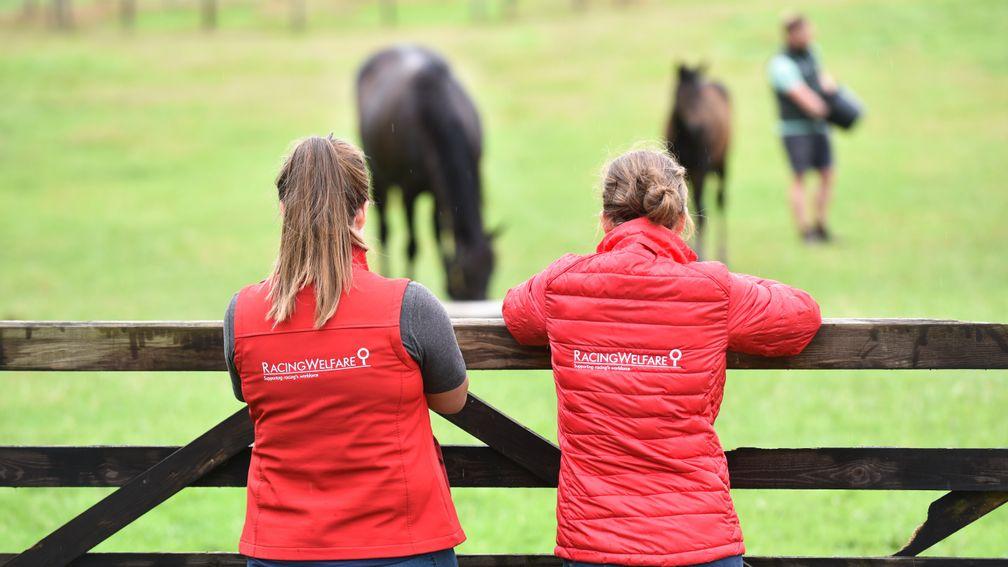
"It's important that we engage our fans, because people, even those who are already interested in racing, still want to be reassured that behind the scenes the care of the horse and the welfare of the horse is at a level they can be confident about," she says.
"So we will never be to the exclusion of these fans – and there are a lot of them to get to – but we need to get to new people, so we started tracking people who come along, and for 70 per cent of people who turned up last year it was their first time, which is a really healthy indicator.
"There's no point in engaging with antis, though, and that's what National Racehorse Week is not about. The most important way of engaging with antis, the people who will never be persuaded, is by being able to rebut the myths and the mysteries that they like to put out, and this is a great way of doing that for people prepared to listen."
It's a message echoed by participants across the board, not just in racing yards but in newer additions like stud farms and rehoming/retraining centres. Grace Muir is at the heart of the good work done by the Homing Ex-Racehorses Organisation Scheme (Heros) and is glad for the opportunity to showcase the scheme's work, while recognising there is still a way to go.
"The people doing it are doing a good job, driving it forward," she says, "and while getting the message out doesn't mean all the public are going to change their views, if only a percentage do, then it's been worth it.
"You can do only so much in five years, though. It's got to carry on, to gain traction and measure outcomes. We've got to be proud of our sport and that needs transparency. We need to tell the story warts and all, not just the shiny story. Some horses do fall through the cracks, but there is a safety net to pick them up."

'We're reaching out to different audiences'
One of the keys to ensuring NRW continues to thrive – beyond hard graft, commitment and belief – is funding, by a host of groups but principally the Levy Board and the Racing Foundation, which has given £450,000 over the five years.
Tansy Challis, the Foundation's chief executive, has seen the week grow in all the right directions, and is another to stress this widening of scope as one of its healthiest aspects.
"Our funding for the last three years has been focused on community engagement and outreach," she says, "getting young people into yards and taking horses into the community, to schools and care homes, creating a new audience for racing, inspiring young people and urban and diverse communities, making racing more accessible.
"We're looking at social impact, social relevance, reaching out to different audiences, which fits our charitable remit for the sustainability of the sport."
All the funding in the world, though, won't get the job done if there's no take-up from the wider industry, and it's this across-the-board enthusiasm that has heartened Challis most.
"This is a unique project in that all racing's stakeholders are joined up in helping to deliver it; it's a great example of what can happen if we all pull together," she says.
"We've seen Jockey Club Racecourses, Arc and the independents working together, with interest from Horse & Hound to local MPs to Mumsnet. It has grown beyond its original aim while not taking away from that – the thing that still comes through strongest at all the events is how much the staff love the horses."

Whitfield is on the same page regarding the breadth of participation within racing.
"I've worked in the motor industry, on sailing programmes, all sorts of sports, and there's no other sport that does what racing does and does it for free, properly delivered by people on the ground, the trainers, the stud owners, the retrainers – it's their event and their enthusiasm is incredible," she says.
'We know that all of this negativity is untrue'
Much of NRW is about tried-and-tested activities designed to showcase the charms of the thoroughbred.
"These are curious creatures who don't just stand at the back of their boxes," says Whitfield, "and I've seen kids engage with them, kids from inner cities, some of whom are touching a horse for the first time. Those memories stay with them and some even end up working in the industry."
In fact, the Mullins yard is living proof that close encounters with racehorses can shape lives and careers.
"It's a big help in staff recruitment," says the trainer. "The number of young staff who come to me through the initial introduction to the yard with their parents on our open day is significant, 12- and 13-year-old kids who are going to riding schools and would like to work with horses. I'm looking at two of them out of the window now."
This is part of the reason why the date of the week has now been changed to fit in with term time for schoolkids, making it a more family-oriented occasion throughout the week, with trainers reportedly putting on more places to accommodate demand on what were once the quieter days.
NRW, though, still has at its core the overarching fundamentals of horse welfare and the need to show, rather than tell, the interested public just how much is done within racing on that front.
"Within the sport we know that all of this negativity is untrue and that the horses are well looked after, from the day a foal is born, right through, and increasingly so, to the retirement of racehorses and their careers after racing," says Mullins.

"At our open day we have equine dentists and farriers, we do schooling and a retraining display, featuring people who have had old horses of mine who have gone on to do well. It's a great opportunity for us to show the general public, some of whom may be suspicious about what we may or may not be doing.
"With some people you'll never win the argument, but in the middle ground there are a lot of people whose minds are open and this week is a great opportunity to focus not only on the sport but also on those wonderful four-legged creatures."
NRW is about messaging, yes, but there can be knock-on benefits across a wide spectrum, with the open days offering chances to raise money for worthy causes, and even for hard-working trainers to get their own brand out there.
"We run ours for a local hospital charity and a racing charity," says Mullins. "We don't charge people to come in but we do auctions and that kind of thing – and that helps participation.
"It's grown from 50 to more than 500 people, and, while I wouldn't say it's ever brought a JP McManus to our door, we have a racing club and partnerships, and any publicity we get is a positive, even though that's not why we do it.
"It's a great opportunity for Wilsford Stables to show itself off, but also to give something back to the greater industry."
'It's something we can be truly proud of'
In its fifth year, NRW seems to be, by popular consent, a success story with, as Mullins says, "no negative side" and a host of benefits for all involved.
The struggle against ignorance continues, but experience shows that, while a tiny minority will never be won over, even by hard facts and heart-warming personal experience, the reasonable middle ground is increasingly populated by people who will respond positively to an open and honest portrayal of what racing has to offer – and often fall in love with racehorses in the same way that its devotees have.

"For me, it's about collectively caring for the horses, from the cradle to the grave, and bloody well meaning it," concludes Muir bluntly.
"We're a society that has information at our fingertips and racing has got on the front foot with this of late," insists Mullins, stressing the week's valuable "big push" towards getting racing's message across.
Challis is especially pleased to be reaching more school children, out of term time.
"The next generation is important," she says. "The feedback tells us that 100 per cent of people said that interacting with racehorses impacted their mood and mental wellbeing on the day, which is quite something, and something we'd like young people to know."
Whitfield, meanwhile, sums up the five-year impact of the scheme with a satisfied and positive outlook, although not with complacency.
"I don't think anybody understood how powerful it would be for racing, how positively it would be received and how it would continue to thrive," she says.
"It's important not to be closed off to ideas, and we still want to improve the mix of people who come along, but we're very pleased with the progress we've made.
"We have a lot of challenges in racing and we like to beat ourselves up, but National Racehorse Week is something we can be truly proud of."
Read more . . .
National Racehorse Week provides perfect chance to see the Seven Barrows stars and more in Lambourn
The Front Runner is our unmissable email newsletter available exclusively to Racing Post+ subscribers. Chris Cook provides his take on the day's biggest stories and tips for the upcoming racing every morning from Monday to Friday. Not a Racing Post+ subscriber? Join today
Published on inNational Racehorse Week
Last updated
 Copy
- Carrots, cuddles and a baffled vicar - Joey and Jordan Banjo deliver star turns at a London church for National Racehorse Week
- A record number of visitors, 150 horses and 25 stitches in Sean Bowen's mouth – inside Olly Murphy's National Racehorse Week open day
- WATCH: York Ebor festival review - plus a look into National Racehorse Week | The Front Page
- How to turn a 32-race maiden into a champion - the welcome new addition to National Racehorse Week
- 'We're in a turbulent time when racing is struggling to find its own identity - we've got to be proud of what we do'